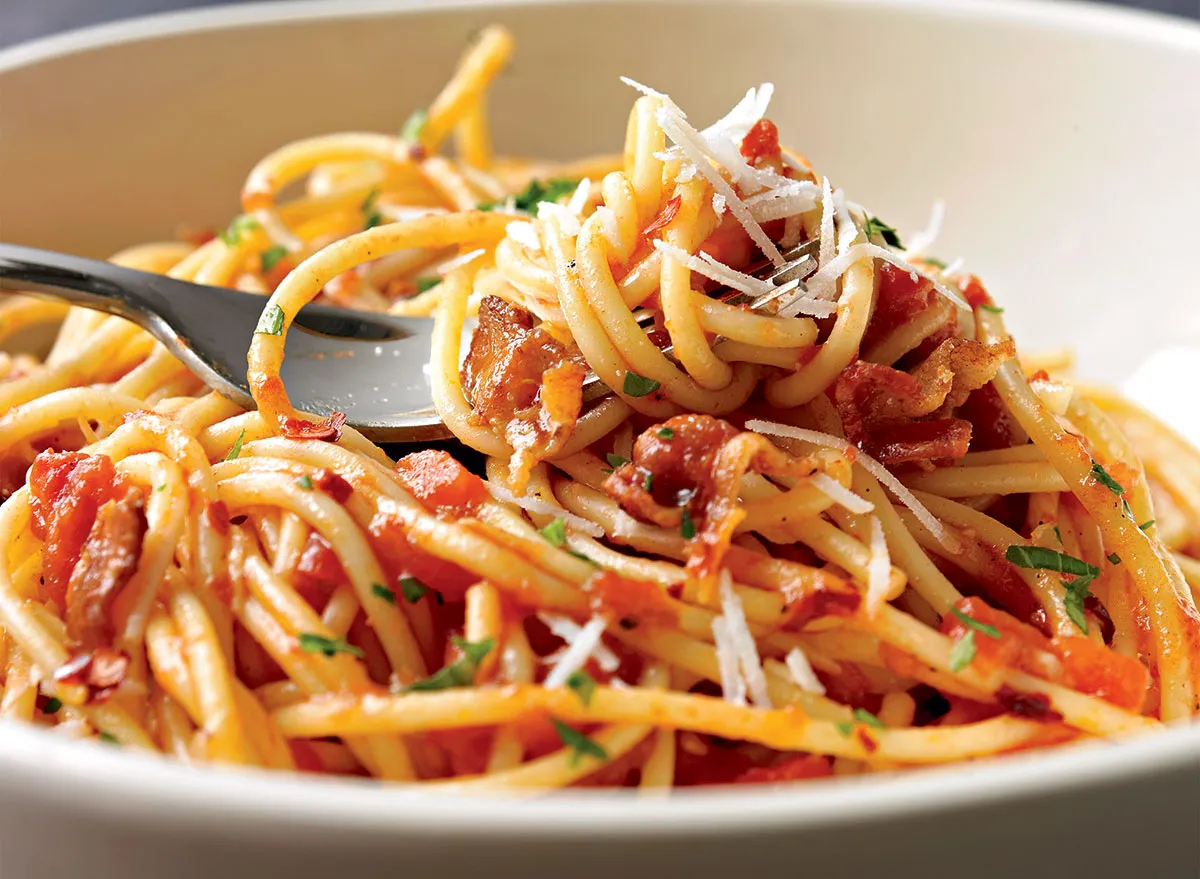
Perfect Pesto Pasta Recipe
fromgrandmarecipes.comgrandmarecipes.com/perfect-pesto-pasta-recipe

Ingredients
Instructions
Using a Food Processor (Recommended for ease):
Place the pine nuts in a dry skillet over medium-low heat. Toast for 3-5 minutes, stirring frequently, until they are lightly golden and fragrant. Be careful, as they can burn quickly. Remove from heat and let them cool slightly.
Add the toasted pine nuts (or walnuts) and roughly chopped garlic to the bowl of your food processor. Pulse a few times until they are finely minced.
Add the fresh, dry basil leaves and coarse sea salt to the food processor. Pulse several times until the basil is finely chopped and incorporated. Scrape down the sides of the bowl as needed.
With the food processor running on low speed, slowly drizzle in the extra virgin olive oil in a thin, steady stream. Continue processing until the mixture is smooth and emulsified. It doesn’t need to be perfectly smooth; some texture is desirable.
Transfer the pesto mixture to a medium bowl. Stir in the freshly grated Parmesan cheese (and Pecorino, if using) and freshly ground black pepper. If using, stir in the optional teaspoon of lemon juice.
Taste the pesto. Adjust seasoning if necessary – you might need a pinch more salt or pepper. If the pesto is too thick for your liking, you can stir in a tablespoon or two more of olive oil or a little bit of cold water until it reaches your desired consistency.
Using a Mortar and Pestle (Traditional Method):
Add the garlic cloves and a pinch of the coarse sea salt to the mortar. Crush them with the pestle until a smooth paste forms. The salt acts as an abrasive.
Add the (toasted, if preferred) pine nuts and grind them into the garlic paste until well incorporated and fairly smooth.
Add the basil leaves gradually, a handful at a time. Use a gentle, circular crushing motion with the pestle against the sides of the mortar. Continue until all basil is incorporated and forms a vibrant green paste. This step requires patience.
Gradually stir in the freshly grated Parmesan cheese (and Pecorino, if using) until well combined.
Slowly drizzle in the extra virgin olive oil while continuously stirring with the pestle or a spoon, until the pesto is emulsified and reaches a creamy consistency.
Stir in the remaining salt (if needed) and black pepper. Taste and adjust.
Part 2: Cooking the Pasta
Bring a large pot of water to a rolling boil (at least 4-6 quarts of water for 1 pound of pasta).
Once boiling, add 1-2 tablespoons of salt to the water. This is crucial for flavoring the pasta from the inside out. The water should taste “like the sea.”
Add your chosen pasta to the boiling salted water. Stir immediately to prevent sticking. Cook according to the package directions until al dente – tender but still firm to the bite. Overcooked pasta will result in a mushy dish.
Before draining the pasta, reserve about 1 to 1.5 cups of the starchy pasta water. This “liquid gold” is key to creating a creamy sauce that clings to the pasta.
Part 3: Assembling the Pesto Pasta
Drain the pasta in a colander. Do not rinse it.
In a large skillet or the pasta pot itself, add a few tablespoons of the reserved pasta water and gently warm it over low heat. Add the pesto and stir just until it’s slightly warmed and loosened – do not cook or boil the pesto, as this will dull its color and fresh flavor. Then add the drained pasta.
Add about 1/4 to 1/2 cup of the reserved hot pasta water to the pasta and pesto. Toss or stir vigorously to combine. The starch in the pasta water will help the pesto emulsify and create a smooth, creamy sauce that coats every piece of pasta beautifully. Add more pasta water, a tablespoon at a time, if needed to reach your desired consistency. The sauce should be luscious, not dry or watery.
Taste the pasta. If needed, you can add more pesto, a pinch of salt, or a little more Parmesan cheese.
Plate the pesto pasta into warm bowls.
Nutrition
- Serving Size
- One Normal Portion
- Calories
- 550-750