Curry Udon (Udon Noodles in Curry Broth)
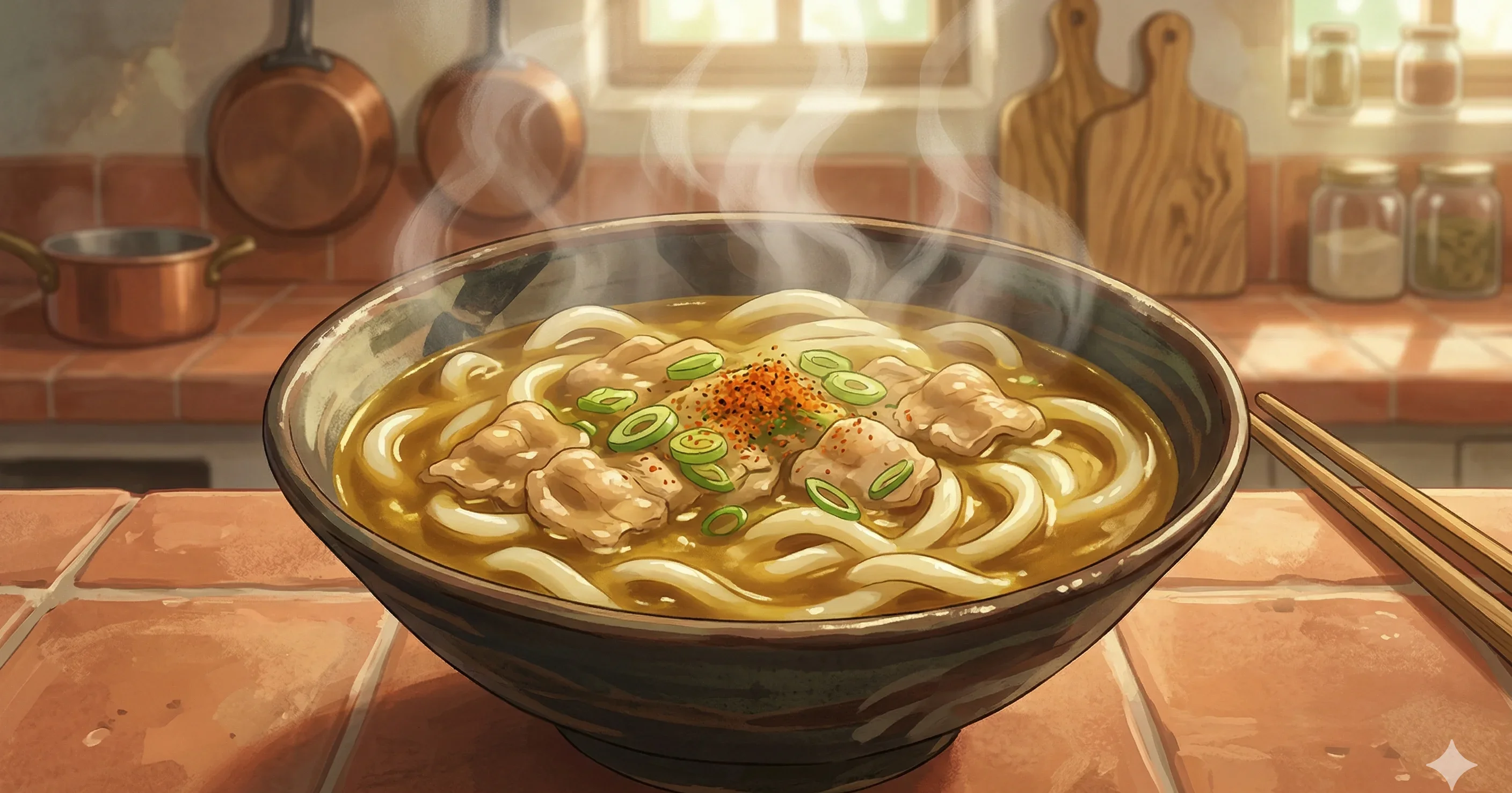
Thick udon noodles in a rich dashi-curry broth with pork and sweet onion. A warming Japanese comfort dish that bridges noodle soup and curry.
Ingredients
Instructions
If using fresh udon, bring a large pot of water to a boil and cook the noodles according to the package instructions, typically 1 to 2 minutes. Drain, rinse briefly under warm water to remove excess starch, and set aside. If using frozen udon, cook from frozen for 1 minute. If using dried udon, cook until tender but still chewy and drain.
Combine the dashi, soy sauce, and mirin in a medium saucepan. Bring to a gentle simmer over medium heat. Taste the seasoned dashi: it should be savory and slightly sweet, with the umami clearly present. This is the base flavor of the broth. Keep it warm.
In a separate small saucepan, melt the butter over medium-low heat. Add the flour and stir with a wooden spoon or spatula until it forms a smooth paste. Cook for 1 minute, stirring constantly, until the roux smells nutty and has turned a shade darker. Do not let it brown.
Add the curry powder to the roux and stir for 30 seconds to bloom the spices. The mixture will become very aromatic and slightly dry. This brief toasting activates the volatile oils in the curry powder and removes any raw, powdery taste.
Gradually ladle the warm seasoned dashi into the roux, about 100 ml at a time, stirring vigorously after each addition. The first few additions will create a thick paste; keep stirring until smooth before adding more liquid. This gradual addition prevents lumps. After all the dashi is incorporated, you should have a smooth, golden-brown broth with a velvety consistency.
Return the curry broth to the medium saucepan if you prepared the roux in a smaller pan. Add the sliced onion. Simmer over medium-low heat for 8 to 10 minutes, stirring occasionally, until the onion is completely soft and translucent. The broth will thicken slightly as the onion releases its moisture and then cooks down.
Add the sliced pork belly to the simmering broth. Cook for 3 to 4 minutes, stirring gently to separate the slices, until the pork is cooked through and the fat has rendered into the broth. Skim any foam that rises to the surface.
Taste the broth and adjust the seasoning. If it is too thick, add a splash of dashi to thin it. If it needs more depth, add a teaspoon of soy sauce. If it lacks sweetness, add a teaspoon of mirin. The finished broth should coat the back of a spoon but still flow freely. It should be noticeably thicker than a standard noodle soup but thinner than kare raisu.
Divide the cooked udon noodles among four large, deep bowls. If the noodles have cooled and stuck together, dip them briefly in hot water to loosen them before portioning.
Ladle the hot curry broth over the noodles, distributing the pork and onion evenly. The broth should just cover the noodles. Use about 250 ml of broth per bowl.
Scatter scallion rings over the top and offer shichimi togarashi at the table. Some people also like a sprinkle of grated cheese on top, a modern addition that has become popular at certain curry udon shops.
Serve immediately with a deep spoon and chopsticks. The spoon is for the broth, the chopsticks are for the noodles. A bib or dark-colored shirt is recommended for the enthusiastic eater. Curry udon is best eaten very hot, slurped with abandon.
Nutrition
- Calories
- 609 calories
- Fat Content
- 33 g
- Saturated Fat Content
- 13 g
- Cholesterol Content
- 55 mg
- Sodium Content
- 980 mg
- Carbohydrate Content
- 58 g
- Fiber Content
- 2 g
- Sugar Content
- 6 g
- Protein Content
- 11 g