Tonkotsu Ramen (Pork Bone Broth Ramen)
fromopenspicebox.comopenspicebox.com/en/recipes/tonkotsu-ramen
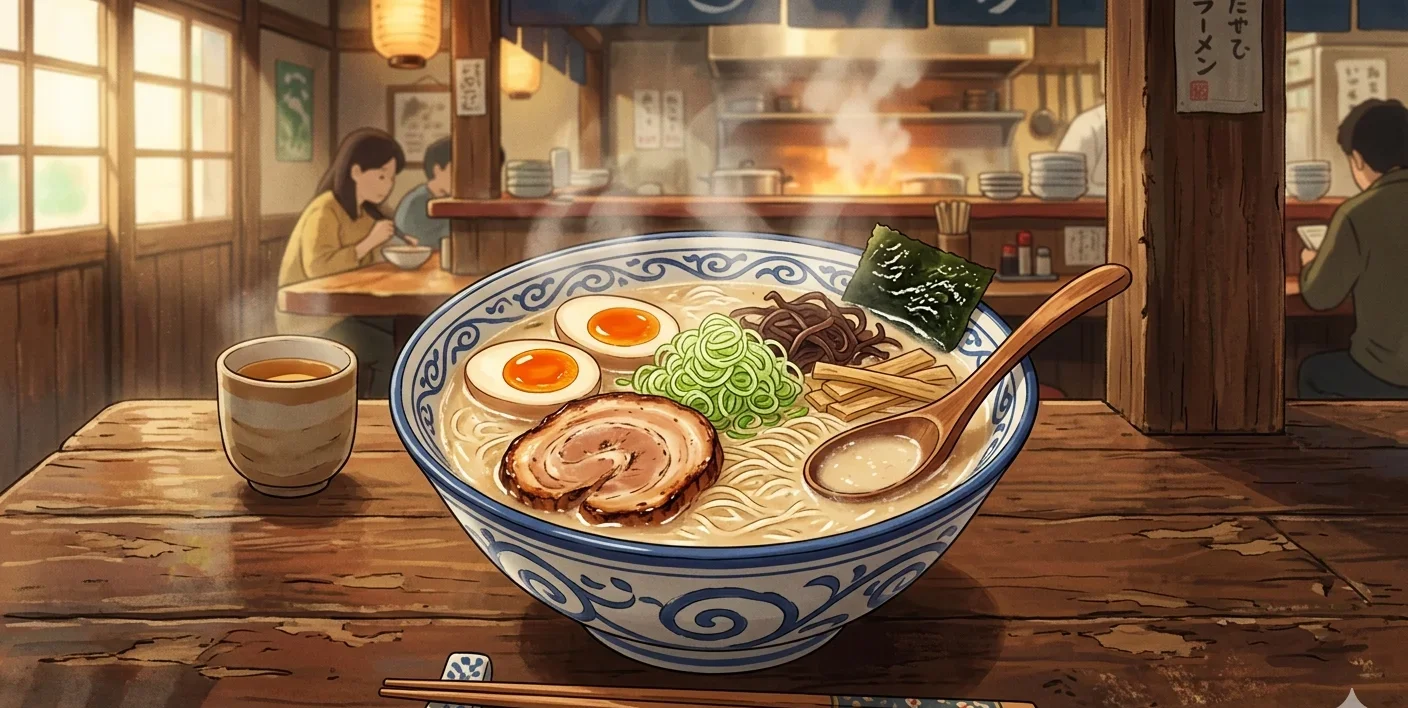
Tonkotsu ramen is a rich, milky pork bone broth noodle soup from Fukuoka, Japan. This pressure cooker method produces an intensely flavorful bowl in about 3 hours instead of the traditional 12.
Ingredients
Instructions
Rinse the pork leg bones and pork hock under cold running water to remove any loose debris. Place them in a large bowl and cover with cold water. Soak for 15 minutes, changing the water several times, until the water runs mostly clear. This draws out residual blood that would otherwise cloud the broth and produce off-flavors. If using pork backbones, look for any white spinal cord tissue and remove it with chopsticks, as it can produce a strong odor.
While the bones soak, peel away the papery outer layers of the garlic head and trim off the root end. Slice the head in half crosswise to expose the cloves. Slice the ginger thinly, leaving the skin on. ### Pressure cook the broth
Place the drained bones, pork hock, garlic, ginger, and 1.9 L of water in the pressure cooker pot. The water level should sit at or below the maximum fill line. If it exceeds the line, remove some water and set it aside to add back later during the open boiling stage. Lock the lid, set the valve to sealing, select high pressure, and cook for 60 minutes. The cooker will take roughly 40 minutes to reach full pressure before the countdown begins. You now have about 100 minutes to prepare everything else.
If you do not have a pressure cooker, use a large stockpot. Add an extra 500 ml of water (for a total of 2.4 L) and bring to a vigorous boil. Reduce to a strong simmer, partially covered, and cook for 3 to 4 hours. The longer the bones simmer, the more collagen and flavor they release. ### Start the cold-brew dashi
Combine the kombu, dried shiitake mushrooms, and niboshi in a bowl with 480 ml of water. Set it aside at room temperature. The umami compounds will extract slowly over the next hour or so without any cooking. This gentler approach avoids the bitterness that boiling kombu can introduce and produces a cleaner supporting stock. ### Make the shoyu tare
Combine the sake, mirin, usukuchi soy sauce, and water in a small saucepan. Drop in the small piece of kombu and set over medium heat. Bring the liquid close to a simmer, watching for small bubbles at the edges, then reduce the heat to low and hold there for 3 to 4 minutes. The kombu will soften and release a faint sea scent. Turn off the heat.
Add the 25 g of salt and stir until fully dissolved. Let the tare cool to room temperature. Do not reheat the tare after the salt is added, as the salt can crystallize and refuse to dissolve properly. The finished tare should taste intensely salty and savory on its own. It will balance once diluted in the broth. ### Prepare the hidden seasonings
Cut the onion in half, leaving the skin on. The skin adds a gentle golden tint to the broth. Cut the scallions in half crosswise. Set both aside until the pressure cooking is done. ### Open-boil and skim the broth
When the pressure cooker cycle ends, carefully release the pressure using the quick-release valve. Use a long spatula to turn the valve and drape a paper towel over the opening to catch splatter. Open the lid and set the pot to saute mode on high heat (or transfer the contents to a large stockpot over high heat on the stove). Bring the broth to a vigorous, rolling boil.
Skim the scum and foam that rise to the surface using a fine-mesh skimmer. You will need to do this repeatedly over the next hour. Take care not to remove the rendered fat or any pale, creamy bone marrow along with the scum. The fat and marrow are essential to the richness of the finished broth. Keep the heat high throughout. Lowering the heat causes the scum to sink back into the liquid rather than floating where you can catch it. ### Add the hidden seasonings
After 5 to 10 minutes of skimming, add the halved onion and scallion pieces to the boiling broth. Add the sake and rice vinegar. The vinegar will help break down the bones further and brighten the overall flavor without tasting sour in the finished soup.
Fish the shiitake mushrooms and niboshi out of the cold-brew dashi and add them directly to the broth. Reserve the dashi liquid in its bowl. The solids will contribute another layer of umami as they simmer.
Add the katsuobushi to the broth and stir to combine. The bonito flakes will darken and soften as they absorb the liquid. Continue boiling vigorously for 30 minutes, stirring occasionally to prevent anything from sticking to the bottom. The broth should be bubbling actively. If it splashes, place a mesh splatter guard over the pot. ### Finish and strain
After 30 minutes, pour only the dashi liquid into the pot, leaving the kombu behind in the bowl. Discard the kombu or save it for another use. Continue boiling for another 30 minutes, stirring occasionally. The broth will reduce slightly and take on a thick, opaque, creamy appearance. This is the emulsification happening: the vigorous boil is forcing fat and collagen into a stable suspension in the liquid.
Turn off the heat. Using tongs, lift out the large bones and transfer them to a fine-mesh strainer set over a clean pot. Let any residual broth drain through, then discard the bones. Remove the remaining solids (onion, scallion, ginger, garlic, mushrooms, bonito) with tongs and press them firmly against the strainer with a wooden spatula to extract as much liquid as possible. Discard the solids.
Strain the broth through the fine-mesh strainer in small batches, pressing gently on any remaining bits. Working in small pours prevents the strainer from overflowing and catches all the fine sediment. The finished broth should be creamy, opaque, and thick enough to coat a spoon. You should have roughly 1.4 to 1.6 L. ### Assemble the ramen
Bring a large pot of water to a rolling boil for the noodles. Reheat the tonkotsu broth in a separate pot, keeping it covered and at a gentle simmer. Warm four ramen bowls by filling them with hot water and letting them sit for a minute.
Drain the hot water from the bowls. Spoon 1 Tbsp of shoyu tare into each bowl. This is the right amount of seasoning. Adding more will darken the soup and overpower the milky broth.
Cook the ramen noodles according to the package directions. Fresh noodles typically need only 1 to 2 minutes in rapidly boiling water. They are done when they are tender on the outside but still have a slight resistance at the core. Drain thoroughly.
Ladle about 350 ml of hot tonkotsu broth into each bowl over the tare. Divide the drained noodles among the bowls. Use chopsticks to lift the noodles from the broth and lay them back down so they line up neatly in one direction.
Add your toppings quickly and serve immediately. The noodles will absorb the broth as they sit, so speed matters here. Arrange the chashu, ramen egg halves, menma, wood ear mushrooms, pickled ginger, and nori around the noodles. Scatter the sliced scallions and sesame seeds on top.
Nutrition
- Calories
- 834 calories
- Fat Content
- 45 g
- Saturated Fat Content
- 17 g
- Cholesterol Content
- 130 mg
- Sodium Content
- 1280 mg
- Carbohydrate Content
- 55 g
- Fiber Content
- 2 g
- Sugar Content
- 2 g
- Protein Content
- 35 g