Spanish Paella
fromrecipetineats.comwww.recipetineats.com/wprm_print/spanish-paella
Recipe video above. The most famous Spanish dish of them all! Paella is meant to be a fun relaxed dish, so don't get hung up about having the exact same seafood I've used - see Notes. And don't be scared of making paella - it is actually very forgiving if you have the right liquid/rice ratios and follow the order in which I cook things!Note on Chorizo - NOT in traditional Spanish Paella recipes however, it's widely used in Spanish restaurants outside of Spain. Australia would faint if I excluded it. So it's in!
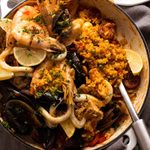
Ingredients
Garnish
Instructions
Chorizo - Heat 1 tbsp oil in a 30cm / 10" paella pan or large skillet over high heat (Note 9). Add chorizo and cook until browned on each side (~ 3 minutes). Remove with a slotted spoon and set aside.
Squid - Add squid and cook for 45 seconds on each side, then remove and set aside.
Garlic, onion, capsicum - Add remaining oil (if needed). Add garlic and onion, cook for 2 minutes. Add capsicum, cook for 1 minute.
Chicken - Add chicken. Cook for 2 minutes until lightly browned but still raw inside.
Add Rice - Add rice and mix until the grains are coated in oil.
Cooking broth - Add in most of the chorizo (reserve 1/4 for garnish), chicken stock, fresh or crushed tomato and saffron. Stir.
Simmer 1 - Bring it to a simmer then adjust heat so it's simmering fairly gently (not super rapidly, will burn rice). Simmer for 10 minutes - no stirring! At this stage, a bit of rice should be poking through to the surface but there should still be plenty of liquid.
Add peas, prawns and mussels - Scatter over peas, squidge the prawns and mussels into the rice (partial submerge is fine).
Simmer 2 - Cook for 8 minutes (turn prawns halfway if you think it's necessary) or until prawns are opaque, mussels are open, and most of the liquid has been absorbed but still a bit liquidy. Discard any mussels that do not open. Remove from stove.
Check rice - Do a taste test to see if the rice is cooked - it should be firm but cooked. If it is too firm for your taste, no stress, just add a splash of hot water (not too much!) and keep cooking.
Rest - Scatter over squid and reserved chorizo (residual heat will warm through), cover with lid then rest for 5 minutes (rice will absorb remainig liquid). Paella rice should now be tender but "juicy", not stodgy and thick (if it is, add splash of water to loosen it).
Garnish - scatter with parsley and wedges of lemon. Take to table as is, then mix up rice with seafood before serving!
Notes
- No salt? You'll find if you follow the recipe as is, it is well seasoned from the chorizo, full salt chicken stock (not low salt) and the seafood. When you taste at the end, if you want it saltier, add a sprinkle before you mix it all up for serving. 1. Chorizo - make sure you get cured chorizo (ie already cooked) not raw chorizo (ie like raw sausage, won't slice neatly). 2. Squid / calamari - often sold pre sliced, or buy a tube and slice yourself (as pictured in post). 3. Rice - paella is best made with paella rice. Get anything labelled: "Bomba, Calasparra, Valencia or de Valencia, or paella rice". Packs often have a photo of paella or "great for paella!" splashed across it. It will probably have the word "Arroz" next to it which means "rice" in Spanish. (Australia - sold at large Woolies, some Coles, all Harris Farms, Spanish / Euro delis, gourmet stores). Best substitutes for paella rice: risotto rice - but add an extra 1/2 cup of water with stock medium grain rice - reduce water to 2 cups per 1 cup of rice (ie use 3 cups stock for 1.5 cups rice) long grain white rice, sushi rice - will work per medium grain rice, but finished dish mouthfeel quite different to paella (still tasty though!) Unsure how much liquid to use for your rice? Make this recipe with 3 cups of stock for 1.5 cups rice, that's a safe amount for any type of white rice. Then if the rice is still too firm at the end, just add boiling water or hot stock 1/2 cup at a time and keep cooking. Drizzle all over the pan and just leave it om the stove. Do not use: brown rice (takes too long to cook, too firm), basmati (too firm) or jasmine rice (too mushy), sticky rice (texture completely wrong for this dish), wild rice (too firm), black rice (too fancy 😂). Do not ask about quinoa (the answer is NO!😂) If you DO NOT USE seafood, increase the liquid in this recipe to 3 3/4 cups / 925 ml for the 1 1/2 cups rice (because seafood leeches plenty of liquid), and I highly recommend using an excellent chicken stock (or clam juice / gourmet fish stock if you can) plus sautéing 3 chopped up anchovies (or 2 tsp paste) with the onion (it will dissolve, you won't taste anchovies - it will help with flavour loss from no seafood). 4. Tomato - diced fresh tomato is traditional, but if you can't find juicy ones (as I couldn't when I went to film the video) use canned instead. 5. Stock/broth - The better the stock, the better the paella. A homemade fish stock would be best. However, if you use some seafood, it drops juices while it cooks which adds a significant amount of flavour into store bought chicken broth and this is how I usually make it. You could go one step further and simmer the store bought chicken broth for a bit with seafood off cuts - that will add loads of flavour! 6. Saffron - saffron threads are traditional, but expensive! If you're on a budget, use imitation saffron powder instead - 1/4 teaspoon is sufficient, it's potent stuff. 7. Prawns/shrimp - whole fresh or frozen thawed prawns are best here because a) they drop more liquid to add flavour into the rice; b) shell protects to prolong cook time. If you only have pre peeled prawns, squidge them in more towards the end OR cook them after the squid, then remove, then stir them back in at the end. 8. Mussels - magical for paella! They drop loads of liquid which adds so much flavour into paella - about 1/2 cup from just 10 or so mussels. If there's a little raggedy "tuft" hanging from the side of the mussels, pull them out. Also, unless bought vac packed (as is common here in Australia) that says they're cleaned, give them a good scrub under running water. CHECK FOR FRESHNESS by smelling each one because one "off" mussel will ruin the whole pan of paella (yes, really). Fresh mussels smell of the ocean / seawater. You will know if you come across an off one (I don't need to describe the smell, just trust me, you will know). Leftover mussels from packets - you will have more than you need, use the rest to make steamed mussels (on theme to serve on side!). 9. Skillet size - to ensure your rice cooks evenly, you need to use a large skillet (or paella pan!) such that the rice is not stacked up more than about 2 cm / 3/5" deep (before liquids go in). To check before you start cooking: tip rice in, then triple the height to factor in onion, chicken etc. As long as that is 2 cm / 3/5" or less, then it's fine. 10. Variations: Make it a plain chicken paella - use 500g/1lb of chicken. Substitute with turkey, lamb, beef or rabbit (very Spanish!), or even leave out proteins and make it a vegetarian or just a seafood one! Other seafood that is fantastic in paella: Crab, other crustaceans, shell fish, scallops, fish. For things like fish and scallops, brown first, then add back towards the end (the way the squid is done in the recipe). 11. How much to make per person - Allow for 1/3 cup / 65g of rice per person, plus around 150g / 5 oz of proteins and seafood. 12. FANTASTIC to make on the BBQ! Stick the pan right on the grills, then play with heat strength so you get a nice simmer. 13. Nutrition per serving, assuming 5 servings. 137 of the 692 calories is attributable to the chorizo (loaded up with yummy red spicy oil, totally worth it, flavours the rice!).