Best Monkey Bread
Did you know that the average home baker spends over 90 minutes perfecting their sweet treats? What if I told you that you could achieve a truly remarkable,
Ingredients
Instructions
In a small bowl, combine the warm milk, a pinch of granulated sugar, and the active dry yeast. Give it a gentle stir and let it sit for 5-10 minutes until it becomes foamy. This “blooming” ensures your yeast is alive and ready to work its magic, giving you a light and airy best monkey bread. While the yeast blooms, in a large mixing bowl (or the bowl of your stand mixer fitted with a dough hook), whisk together the remaining ¼ cup granulated sugar, the room-temperature egg, melted butter, and vanilla extract. Once the yeast is foamy, add it to the wet ingredients. Gradually add 3 cups of all-purpose flour and the salt. Mix until a shaggy dough forms.
Turn the dough out onto a lightly floured surface and knead for about 5-7 minutes, or until the dough is smooth and elastic. If using a stand mixer, knead with the dough hook on medium speed for about 5 minutes. Add more flour, one tablespoon at a time, only if necessary to prevent sticking. Over-flouring can lead to a tougher best monkey bread. The dough should be slightly tacky but not overwhelmingly sticky.
Lightly grease a clean bowl with cooking spray or a little oil. Place the dough in the bowl, turning to coat. Cover the bowl tightly with plastic wrap or a clean kitchen towel. Let the dough rise in a warm, draft-free place for about 1 hour, or until it has doubled in size. A slightly warmer environment (like a slightly warmed, then turned-off oven) can speed this up.
While the dough is rising, melt the 1 cup of butter in a small saucepan over low heat. Once melted, remove from heat and stir in the packed light brown sugar and cinnamon (and nutmeg, if using). Whisk until the sugar is mostly dissolved and you have a coarse, caramel-like paste. This mixture is crucial for that signature gooeyness of the best monkey bread.
Once the dough has risen, punch it down gently. Turn it out onto a lightly floured surface. You can either roll the dough into small balls (about 1-1.5 inches in diameter) or cut it into small pieces. Pro Tip: For a more rustic look and easier handling, tearing the dough into bite-sized pieces often works beautifully and feels more authentic to the “monkey” theme of the best monkey bread. Aim for about 30-40 pieces.
Generously grease a 10-cup bundt pan or tube pan. Dip each dough ball into the melted butter and brown sugar mixture, ensuring it’s well coated, then place it into the prepared pan nestled close together. You can also spoon some of the caramel mixture over the dough balls as you layer them. This double-coating ensures maximum flavor infusion into every bite of your best monkey bread.
Preheat your oven to 350°F (175°C). Let the assembled monkey bread rest in the pan for about 10-15 minutes while the oven preheats. This brief rest helps the dough relax and puff up beautifully. Bake for 30-35 minutes, or until the top is golden brown and the caramel is bubbling around the edges.
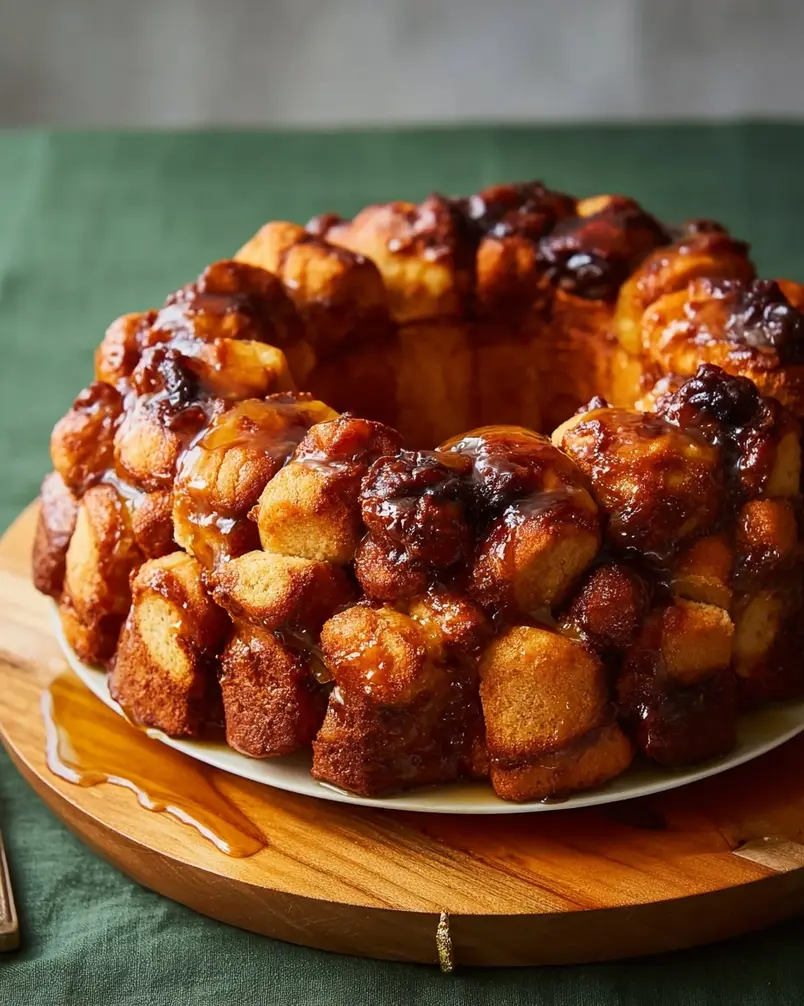
This is a critical step for achieving the best monkey bread presentation. Let the monkey bread cool in the pan for no more than 10 minutes. If you wait too long, the caramel can harden and glue it to the pan. Place a serving plate or platter over the bundt pan, and with oven mitts, carefully and confidently invert the pan onto the plate. If any pieces stick, gently coax them out. While it’s still warm, prepare the glaze by whisking together the powdered sugar, 2 tablespoons of milk, and vanilla extract until smooth. Add more milk if needed for a drizzling consistency. Drizzle generously over the warm monkey bread. This glaze adds that final touch of sweetness and visual appeal.
A1: Absolutely! You can prepare the dough and let it have its first rise. After that, shape it, dip it in the caramel, and place it in the pan. Cover it tightly with plastic wrap and refrigerate overnight. In the morning, let it sit at room temperature for about 30 minutes to an hour and then bake as directed, likely adding a few extra minutes to the baking time.
A2: A classic 10-cup bundt pan or tube pan is ideal for monkey bread. The central tube helps ensure even baking and heat distribution, leading to a beautifully golden and cooked-through result. Ensure it’s well-greased to prevent sticking!
A3: A slightly tacky dough is normal for enriched breads, but excessively sticky dough can be due to a few things. It might be too humid, or you might have simply added too much liquid. Try adding flour gradually, a tablespoon at a time, during the kneading process until it’s manageable. Avoid adding too much flour, as this can lead to a tough best monkey bread.
A4: The key is the balance of butter and brown sugar, and the temperature. Ensure your butter is fully melted and your brown sugar is well incorporated. Don’t overbake the monkey bread, as this can caramelize the sugar too much and make it hard. Cooling for a short period before unmolding is also critical; too long, and it solidifies.
A5: Yes, you can! Grease muffin tins very well. Form small dough balls, dip them, and place 2-3 balls per muffin cup. Baking time will be significantly reduced, likely around 18-22 minutes, so keep a close eye on them. This is a great option for portion control or for individual servings.
A6: The most common culprit is inactive yeast. Ensure your yeast is fresh and that the milk was warm (not hot, as heat kills yeast) when you bloomed it. Also, check that the dough was in a warm, draft-free environment for its rise. If the room is too cold, the rise can be slow or incomplete.

:max_bytes(150000):strip_icc()/21014-good-old-fashioned-pancakes-VAT-004-4x3-02-d6ce3b61def840fcaf40a43f805b733e.jpg)