Recipe video above. Rich and buttery, yet amazingly light and elegant, making delicious, boulangerie (French bakery) quality brioche at home is actually far easier than you'd think! Store bought are pricey and poor imitations of what truly great brioche should be, skimping on butter and using shortcut methods.This is a traditional recipe for French brioche that was created with the assistance of a classically trained French Chef, Jean-Baptiste Alexandre. Meet Chef JB!No stand mixer? See Note 16 for a 5 minute food processor method!Want to bake it later? No problems, refrigerate the dough for a day or two! See Note 17.
Ingredients
Other:
Instructions
Dough:
Bloom yeast (Note 1): In a small bowl, mix 1 tsp sugar, yeast and milk together. Cover with cling wrap and set aside in a warm place for 10 minutes until foamy.
Dough making methods: Base recipe method uses a Stand Mixer. See Note 5 for faster food processor method.
Make dough: In the bowl of a stand mixer fitted with a dough hook, add the flour, eggs, salt, rest of the sugar and the foamy yeast. Mix on Speed 1 until ingredients are combined.
Mixing Part 1: After the ingredients are combined, then mix on Speed 1 for 5 minutes then on Speed 2 for 10 minutes, (Yes really, 15 minutes, see Note 8!)
Slow add butter: With the stand mixer still on Speed 2, drop butter cubes in gradually, over about 90 seconds to 2 minutes, giving the dough a chance to mix most of the butter in. (Note 9)
Incorporate butter: Keep mixing until the butter is fully incorporated- about 1 minute. Dough will be pasty and sticky!
Mixing Part 2: Then mix on Speed 2 for 20 minutes, scraping down the sides of the bowl every now and then.
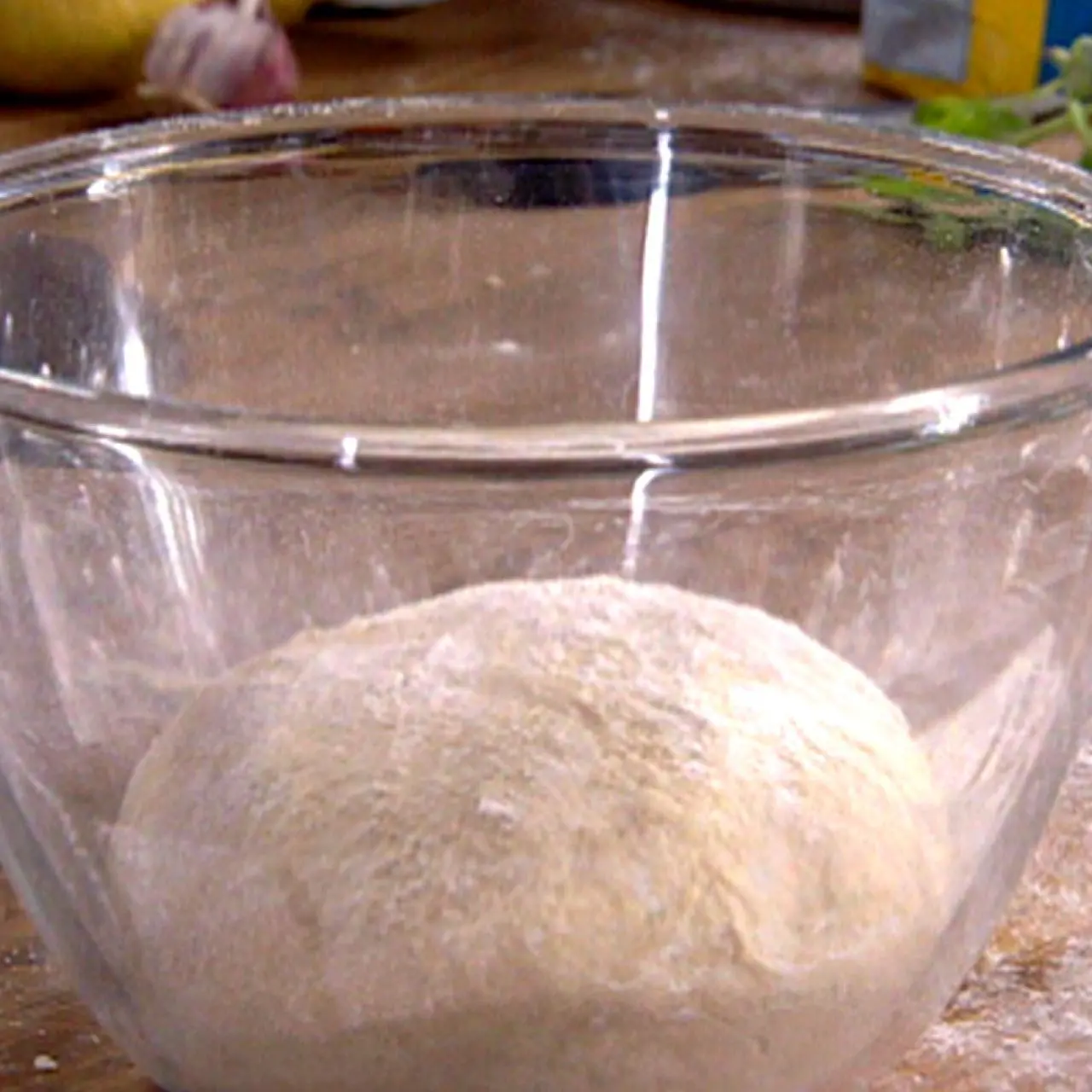
Dough goals (Note 8): At first the mixture it will be very pasty and stuck to the sides of the bowl. By the end, the dough should come together, caught up in the dough hook, and not be stuck on the sides of the bowl. Very soft, but able to pick it up. You should be able to do the "window pane" test using a walnut size piece (Note 10). If not, keep kneading! (Note 11 trouble shooting)
Rising, Fridge & Shaping:
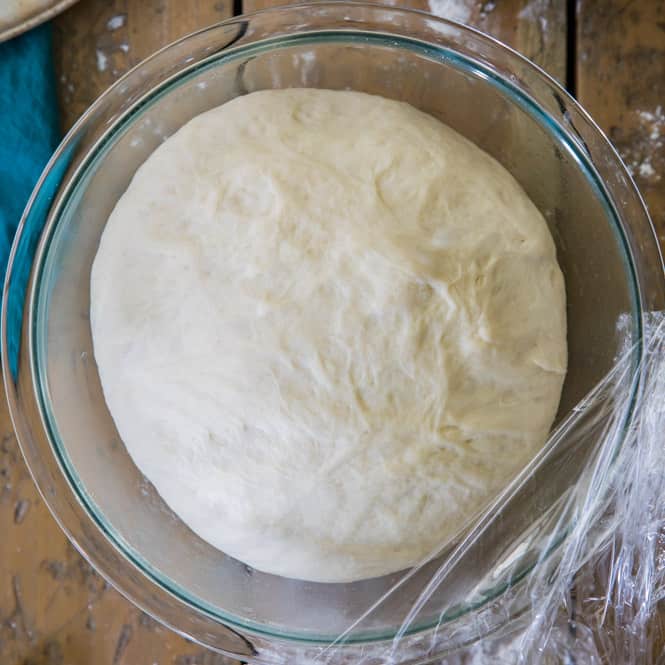
Rise #1 (2 hrs): Shape the dough into a ball, put it back into the stand mixer bowl. Cover with cling wrap and put it in a warm place for 2 hours until it has doubled in size.
Cut into 3: Punch the dough dough to release all the air. Scrape out onto a lightly floured work surface. Fold the outside of the dough in 6 times. Shape into a log then cut into 3 equal portions and shape into a ball (~225g/7.9oz per piece).
Fridge (1.5 hrs): Line a deep container or roasting pan with baking/parchment paper lightly sprayed with oil. Place dough on paper, cover with cling wrap/lid and refrigerate for 1.5 hours (Note 12).
Braid: Remove dough from fridge. Place on a lightly floured work surface and roll each piece into a 35cm/14" logs. Braid the logs, and tuck the ends under to make them tidy.
Loaf pan: Spray a 21.5 x11cm (8.5 x 4.3") loaf pan well coated with oil spray, then place the dough in. Lightly spray cling wrap with oil, then cover the dough.
Rise #2 (3 hrs): Rise in a warm place for 3 hours or until it is just over double in size. (Note 13)
Baking:
Preheat oven: Preheat oven to 200°C/390°F (180°C fan) when dough is almost ready.
Shelf position: Position shelf so loaf will sit in the lowest 1/3 of the oven.
Egg wash: Brush the brioche surface very gently with whisked egg.
Bake uncovered 15 min: Bake brioche for 15 minutes, uncovered, until a beautiful deep golden.
Bake covered 20 min: Remove from oven. Loosely cover with foil. Bake for a further 20 minutes or until the internal temperature is 88°C/190°F. (Note 14)
Turn out and cool: Immediately turn brioche out onto a rack. Cool for at least 45 minutes before slicing (or tearing!) to serve (still warm).
Serving: Best served warm, with butter and lovely jams, the French way! Either slice warm loaf, or toast slices. (Note 16) See in post for more serving ideas - savoury, sweet, breakfast, lunch, dessert!
What the finished brioche should be like:
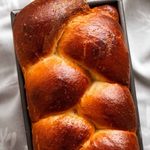
The crust will be delicately crusty and flake gently when you slice it. It will be ultra soft inside, much softer than usual breads, with a pale yellow colour from the butter and eggs. Though traditionally sliced to serve, a unique characteristic is that if you tear the bread, it shreds like cotton candy. This is the sign off a well made traditional French brioche that you will not find in run-of-the-mill grocery store cheap brioche! Subtly sweet with a beautiful butter flavour (another thing store bought lacks!).
Notes
- 1. Yeast - recipe works with dry active yeast too, but the bread is a bit softer with instant yeast. Also note, rapid-rise/instant yeast normally does not need to activated in warm liquid but during testing of our naan recipe we discovered that by blooming instant yeast, breads are softer (in some cases) than adding the instant yeast directly into the dough. For brioche, not only is the bread softer, it rises about 15% higher when instant yeast is activated. If yeast does not go foamy in the blooming step, then your yeast is dead. Time to get another! To use normal active dry yeast, use the same quantity as instant yeast. 2. Milk - full fat / whole milk is recommended here. 3. Flour - Surprisingly (and unusually), brioche works better with plain / all purpose flour rather than bread flour. The crumb is softer and it rises better. 4. Sugar - caster/superfine works better as it incorporates more easily into the dough as grains are finer. But normal white sugar should work fine too. 5. Eggs - Crack 3 eggs into a bowl, lightly whisk, then measure out 1/2 cup / 125 ml. And yes, I really did try to make it work with 2 or 3 eggs, but it wasn't as good! Leftover 1/2 egg used for egg wash. 6. Salt - if you only have table salt (ie finer grains), reduce to 3/4 tsp. 7. Softened butter - target 20 - 22°C/68-71.5°F (if you have a thermometer). Softened butter mixes through dough more easily. But if it's melting, dough will end up greasy. Should be softened but still firm enough to pick up with your fingers. 8. Long mixing time - Brioche is made with what's called an "enriched dough" which is a dough that's high in fat (butter). Fat inhibits the formation of gluten in flour from kneading which makes breads soft, fluffy and rise. This is why you have to knead brioche for so much longer - to make the gluten form before/after adding the butter. Dough goals - Soft dough = soft brioche! We want dough as soft as possible but just firm enough to handle without it getting stuck all over your hands like sticky paste. Very soft, but able to pick it up without the dough sticking all over your hands. If it gets stuck to your hands, keep kneading. You should be able to do the "window pane" test using a walnut size piece (stretch out into thin see through sheet without it breaking, Note 10). If not, keep kneading! (Note 11 trouble shooting) 9. Adding butter - If you dump it all in at once, it's harder to incorporate the butter into the dough. It doesn't need to fully incorporate as you're adding it, but it should partially mix through. 10. Window pane test - This is a standard test in dough making that indicates you have kneaded it enough. Pinch off a walnut size piece of dough, then using both your hands, stretch it out into a sheet so thin you can see the light through it. The dough should be pliable enough to do this without breaking. If it breaks, the dough isn't elastic enough = gluten not yet formed enough = keep kneading. 11. Dough consistency: Too sticky - If at 20 minutes the dough is still really pasty, add 1 tablespoon of flour at a time until the dough is still very soft but just firm enough to handle without it sticking all over your hands. Too crumbly - If your dough is too crumbly at the beginning and never becomes pasty, likely you mis-measured something. This is tough to salvage (having made that mistake myself!). You can try adding warm milk, a bit at a time until you reach the dough consistency pictured in the photos/video. But actually, I would suggest starting over. Greasy (melting butter) - if it's very warm in your kitchen, the butter in the dough may melt during the mixing stage, causing the dough to become very greasy (you will see oil on the surface). If this happens, refrigerate the dough in the bowl for 15 minutes to firm up the butter slightly, then keep mixing. 12. Fridge step (optional) - This makes the soft dough much easier to handle in subsequent steps and also gives the brioche a smoother surface. Without this step, the surface is streaky and "croissant" like from the butter melted within the dough as you handle it. It's mainly visual / ease of handling, which is why it's optional. Read in post for more information. 13. Rise #2: In my loaf pan, rises to 1cm / 0.2" above rim at highest point of dough 14. Internal cooked temperature of 88°C/190°F for brioche is slightly lower than the target temperature of 93-96°C /200-205°F of most breads because it is an enriched dough (ie high fat). Lower fat breads have a higher cooked internal temperature. 15. Reheating/storage: To reheat loaf, wrap whole brioche in foil and place in a 180°C/350°F oven for 10 - 15 minutes (depending on size), then slice fresh. Brioche will freeze for 3 months. Thaw then reheat. 16. Food processor method: Place all ingredients (including bloomed yeast) except butter into food processor. Blitz on lowest speed for 1 minute. With motor running drop butter through feeding tube over 1 minute. Keep blitzing until butter is incorporated into the dough. Then blitz for 3 - 4 minutes on lowest speed until dough is firm enough to handle. Proceed with recipe for Rise #1. 17. Overnight rise: After dividing dough into 3 balls, refrigerate overnight or up to 2 days instead of just 1.5 hours. Take out of fridge, roll into logs and proceed with recipe. Braided loaf will take closer to 4 hours to do Rise #2 (because dough starts colder). 18. Recipe source: Recipe created with the assistance of a classically trained French Chef residing right here in Sydney, Jean-Baptiste Alexandre ("JB"). Read more about JB and working with RecipeTin Eats here! We referenced well respected French cookbooks including: Larousse Gastronomique, Escoffier Le Guide Culinaire; French Patisserie Master Recipes and Techniques from the Ferrandi School of Culinary Arts. 19. Nutrition per slice, assuming 16 slices.


:max_bytes(150000):strip_icc()/ALR-20171-quick-and-easy-pizza-crust-VAT-4x3-2-229693959a224d749b062d4eb8983351.jpg)