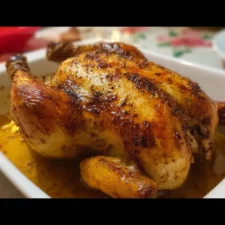
Perfect Roast Chicken Recipe
frommytastefulrecipes.commytastefulrecipes.com/perfect-roast-chicken-recipe
Ingredients
Instructions
Remove your chicken from its packaging. Take out the packet of giblets from the cavity (you can save these for making stock or gravy later).
This is a non-negotiable step. Use several paper towels to pat the entire surface of the chicken, as well as the inside of the cavity, until it is completely and utterly dry. Moisture is the enemy of crispy skin. Any water left on the surface will steam in the oven, preventing the skin from browning and crisping up.
In a small bowl, combine the 1 tablespoon of kosher salt and the 1 ½ teaspoons of freshly ground black pepper. Sprinkle this mixture evenly all over the chicken—on the top, the bottom, the sides, under the wings, and inside the cavity. Be thorough. As you rub it in, the salt will begin to draw moisture out of the skin.
Place the seasoned chicken on a wire rack set inside a baking sheet or on a large plate. Transfer it, uncovered, to the refrigerator. Let it rest for at least 4 hours, but for best results, let it sit for 24 hours. This process, known as dry brining, does two things. First, the salt draws out moisture from the chicken, which then dissolves the salt and is reabsorbed back into the meat, seasoning it deeply. Second, leaving it uncovered in the cold, dry air of the fridge will desiccate the skin, creating a dry, taut surface that is primed to become incredibly crisp in the oven’s heat.
Remove the chicken from the refrigerator and let it sit on the counter for about 45-60 minutes. Placing a cold bird directly into a hot oven can lead to uneven cooking. Allowing it to come closer to room temperature ensures the heat penetrates more evenly, resulting in juicier meat.
Position a rack in the center of your oven and preheat it to 425°F (220°C). A high initial temperature is key for that first blast of heat that starts the skin-crisping process.
While the chicken is resting, make your flavour-packed butter. In a medium bowl, combine the softened ½ cup of unsalted butter, the minced garlic cloves, the chopped fresh thyme and rosemary, and the zest from one lemon. Mix until everything is well incorporated. This compound butter will act as a self-basting agent under the skin, keeping the breast meat incredibly moist while infusing it with aromatic flavor.
This is a fantastic technique for flavour. Starting at the neck end of the chicken, gently slide your fingers between the skin and the breast meat, being careful not to tear the skin. Work your way down until you’ve created a large pocket over both breast halves. Take about two-thirds of your compound butter and push it into this pocket, spreading it as evenly as possible over the breast meat.
Take the remaining compound butter and rub it all over the outside of the chicken—the legs, thighs, and wings. This will help the skin to brown beautifully and add another layer of flavor.
Take the lemon you zested earlier (which should be halved), the quartered onion, the head of garlic with its top sliced off, and a few sprigs of fresh thyme. Stuff all of these into the cavity of the chicken. These aromatics will steam from the inside as the chicken roasts, perfuming the meat with incredible flavor from within.
Trussing, or tying the chicken, helps it cook more evenly and results in a more beautiful, compact presentation. Take a long piece of kitchen twine. Loop it around the tail, then cross it over and loop it around the ends of the drumsticks. Pull tightly to bring the legs together and up against the body. Run the twine along the sides of the chicken and secure the wings tightly against the breast. Tie it off securely.
Place a roasting rack inside a sturdy roasting pan. Place your prepared and trussed chicken on the rack, breast-side up. The rack elevates the chicken, allowing hot air to circulate all around it for more even cooking and crispier skin on the bottom. If you don’t have a rack, you can create a “vegetable rack” by roughly chopping a couple of carrots, celery stalks, and another onion and placing the chicken on top of them.
Place the roasting pan in the preheated 425°F (220°C) oven. Roast for 20 minutes. This initial blast of high heat is what sets the skin and begins the browning process, locking in juices.
After 20 minutes, reduce the oven temperature to 375°F (190°C). Continue to roast for an additional 50-70 minutes. The total cooking time will depend on the exact size of your bird. A general rule of thumb is about 15 minutes per pound.
This is the only foolproof way to know if your chicken is perfectly cooked. About 15 minutes before you think it might be done, start checking the temperature. Insert an instant-read meat thermometer into the thickest part of the thigh, making sure not to touch the bone. The chicken is done when the thigh meat registers 165°-170°F (74°-77°C). The breast meat should be around 160°-165°F (71°-74°C). The temperature will continue to rise a few degrees as the chicken rests.
Once the chicken reaches the correct temperature, remove it from the oven. Carefully transfer the entire chicken to a clean cutting board with a juice groove. Tent it loosely with aluminum foil and let it rest for at least 15-20 minutes before carving. This resting period is critical. It allows the muscle fibers to relax and the juices, which have been driven to the center of the bird by the heat, to redistribute throughout the meat. If you carve it too soon, all that delicious moisture will pour out onto the cutting board, leaving you with dry meat.
After resting, remove the kitchen twine. Carve the chicken by first removing the legs and thighs, then the wings, and finally, slicing the breast meat off the bone.
Arrange the carved chicken on a platter and pour any juices collected on the cutting board over the meat. Serve immediately.
Nutrition
- Serving Size
- One Normal Portion
- Calories
- 450-550





:max_bytes(150000):strip_icc()/275590-marry-me-chicken-DDMFS-4x3-1689-web-5363b11b1bf5493c923d63d083cc4b52.jpg)

