Easy Tonkotsu Ramen Recipe
fromjustonecookbook.comwww.justonecookbook.com/easy-tonkotsu-ramen-recipe
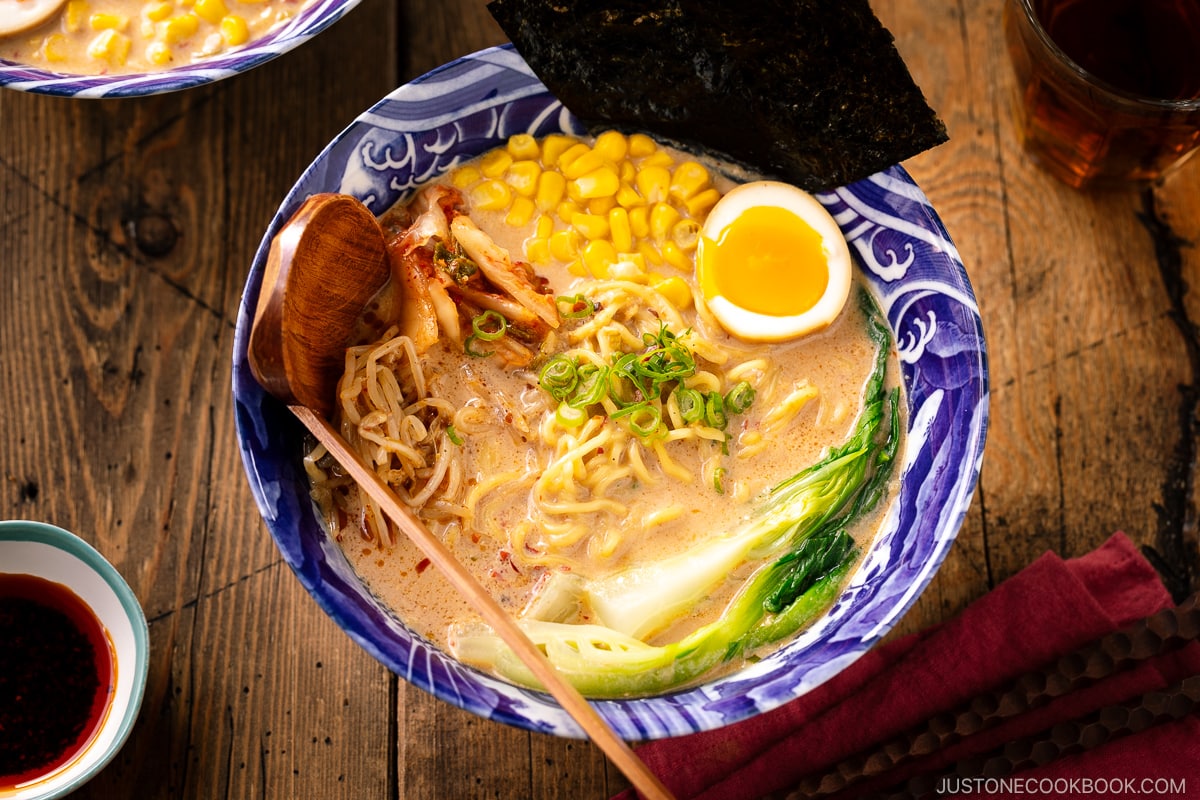
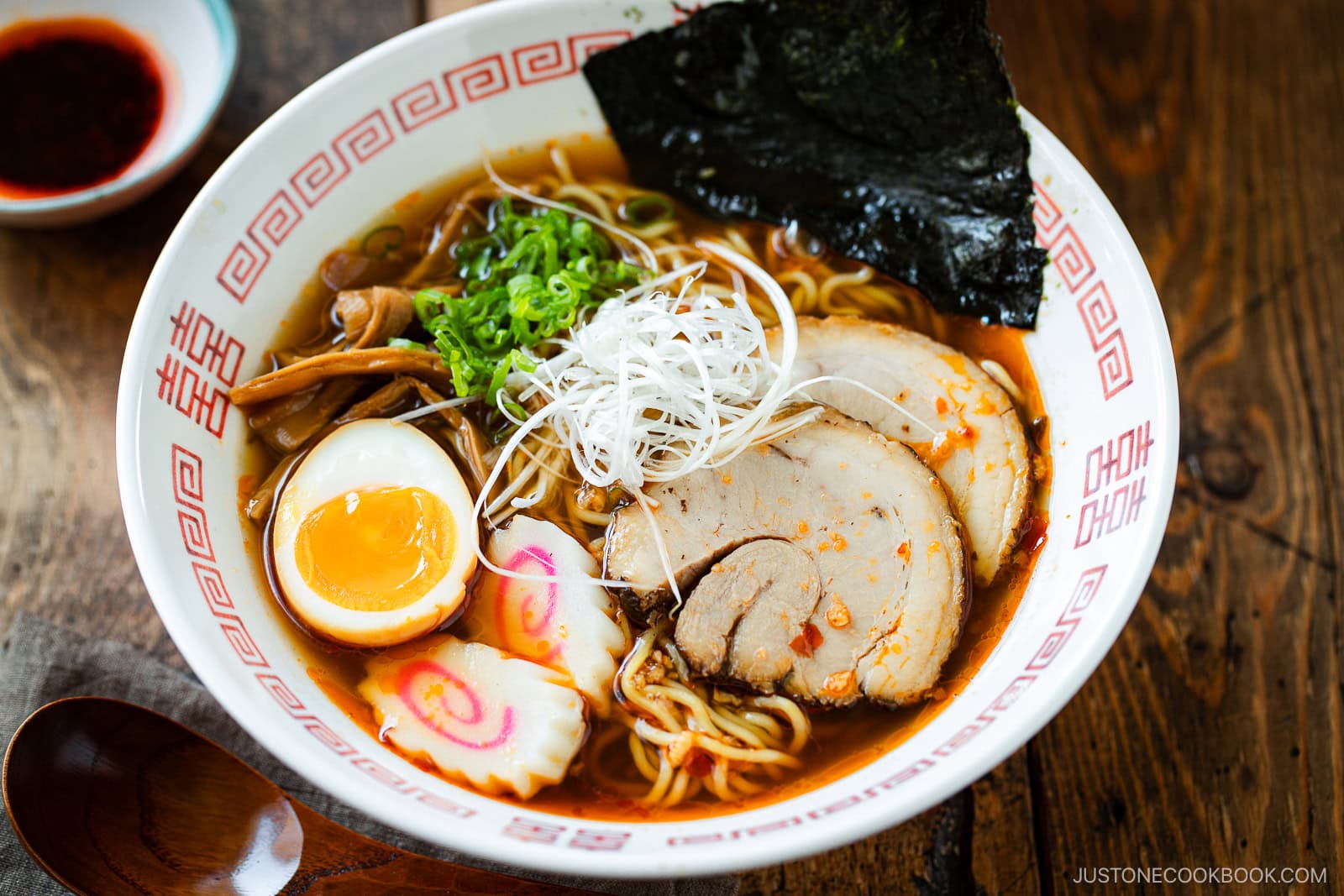
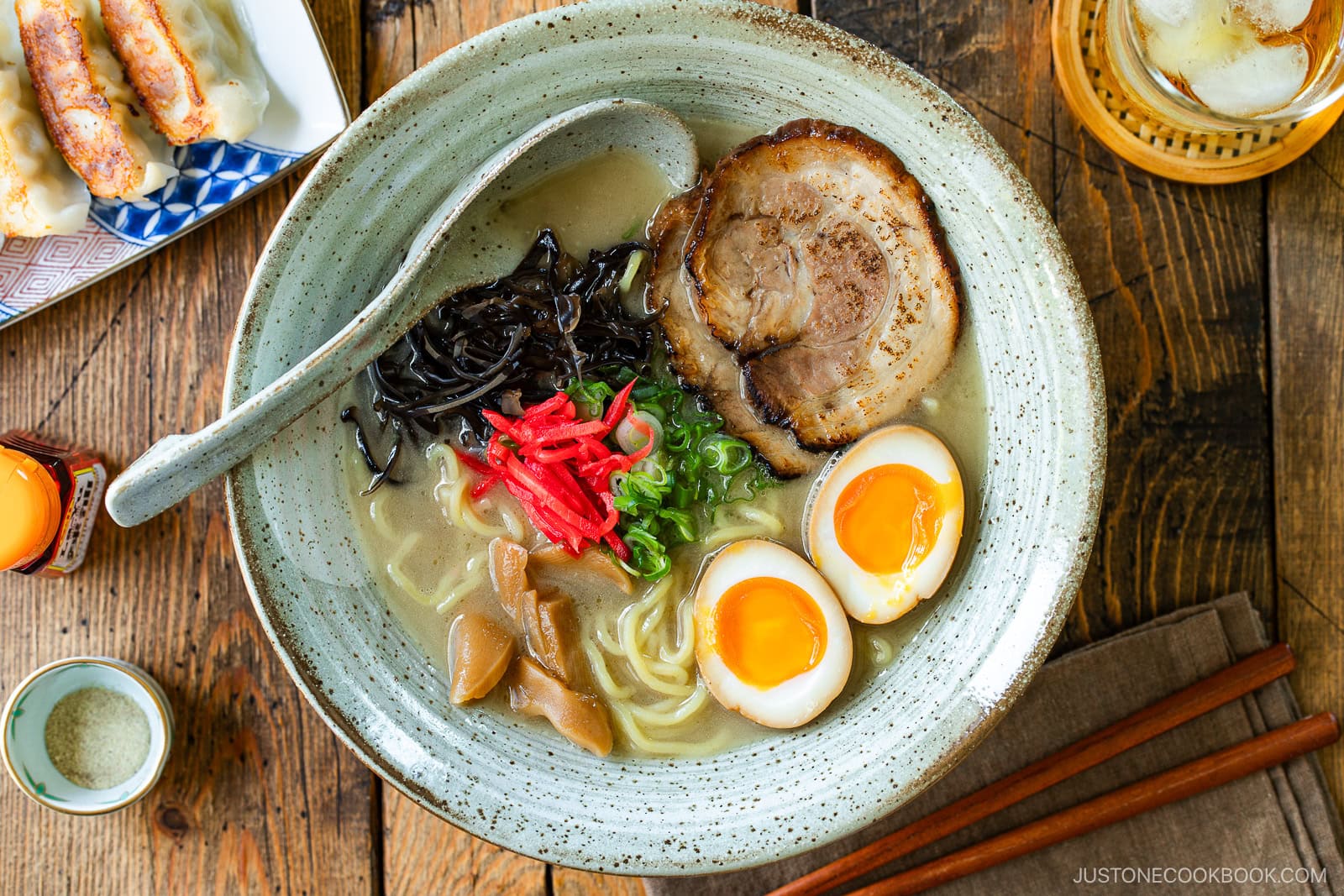
Make my Easy Tonkotsu Ramen recipe for a delicious bowl of noodle soup just like your favorite ramen shop. I'll show you my pressure-cooker shortcut to make a rich, creamy, and intensely flavorful pork broth from scratch in just 4 hours!
Ingredients
Instructions
To Pressure Cook the Tonkotsu Broth
Gather all the tonkotsu broth ingredients.
Rinse 3½ lb pork leg bones and 1.3 lb pork hock with skin under running water.
Soak the pork bones and hock in a large bowl of water for 15 minutes to remove blood, changing the water several times. Nami's Tip: If you’re using pork backbones, remove the white spinal cord-like tissue, as it can give off a strong odor. Use chopsticks instead of your hands to avoid getting cut by the bones.
Meanwhile, peel off the papery outer layers of 1 head garlic (keeping the head whole). Trim off and discard the root end. Then, slice the entire head in half crosswise to expose the cloves.
Slice 1 knob ginger (skin on) into thin slices.
Place the bones, hock, ginger, garlic, and 2 QT water in a pressure cooker pot or in the inner pot of an Instant Pot.
Keep the water at or below the maximum line (see image). If it's above, set some aside and add it back when you boil the broth later. Cover and lock the lid. Point the steam release handle at Sealing. Select Pressure Cooking, high pressure, 60 minutes, and press start. It takes about 40 minutes to come up to pressure, so you have 1 hour and 40 minutes to prepare everything else.
No Pressure Cooker? Use a large stock pot. Add 2 cups (500 ml) more water and simmer uncovered for 3–4 hours. Partially cover the pot to slow the evaporation. The longer it simmers, the more flavor you'll extract from the bones.
To Cold Brew the Dashi
Gather all the dashi (Japanese soup stock) ingredients.
Add 1 piece kombu (dried kelp), 2 dried shiitake mushrooms, and 5 iriko/niboshi (boiled and dried anchovies) to 2 cups water in a medium bowl (I used a glass measuring cup). Set it aside at room temperature to extract the umami.
To Make the Shoyu Tare (Seasoning Sauce)
Gather all the tare ingredients.
Add 2 Tbsp sake, 2 Tbsp mirin, 4 Tbsp usukuchi (light-colored) soy sauce, and 2 Tbsp water to a small pot.
Add 1 piece kombu (dried kelp) and heat over medium heat until nearly boiling. Reduce to low heat and simmer for 3–4 minutes, then turn off the heat.
Add 25 g Diamond Crystal kosher salt to the pot and stir well. Once the salt has dissolved, let the tare cool to room temperature. Nami's Tip: If you boil or reheat the tare after adding the salt, the salt may crystallize and not dissolve properly, so be careful.
To Prepare the Hidden Seasonings
Gather the ingredients for the hidden seasonings. Nami's Tip: Don't skip the rice vinegar. It cuts the heaviness and helps draw the collagen out of the bones as the broth boils.
Cut 1 onion in half with the skin on and 2 green onions/scallions in half crosswise. Set aside until the broth is done pressure cooking.
To Skim the Broth
Immediately after the pressure cooking cycle ends, quick release the pressure by carefully turning the steam release valve with a long spatula to the Venting position (or by pressing the quick release button, depending on your model). Nami's Tip: Lightly cover the valve with a paper towel to reduce the splatter.
Carefully open the lid. For the Instant Pot, select the Sauté mode (30 minutes) and high temperature, and bring it to a hard boil. The broth will bubble and splash, so transfer it to a large stock pot if yours is already close to full. For a regular pressure cooker or stock pot, increase the heat to high and bring it to a hard boil.Skim off the scum that floats to the surface with a fine-mesh skimmer, and keep on skimming over the next hour. Nami's Tip: Don't take too much fat or bone marrow with the scum. The rendered fat is what makes the broth rich.
To Add the Hidden Seasonings
Add the onion and green onions/scallions to the tonkotsu broth.
Add 2 Tbsp rice vinegar (unseasoned) and 2 Tbsp sake. Carefully remove the shiitake mushrooms and anchovies that are soaking in the cold brew dashi and add them to the soup broth. Reserve the dashi liquid (we'll add it later).
Add 1 cup katsuobushi (dried bonito flakes) to the soup and stir well to combine.
To Finish Cooking the Tonkotsu Broth
Keep the soup broth at a rolling boil on Sauté mode (high). Skim the broth occasionally.
Keep the broth at a hard boil and stir hard from the bottom every 10 minutes so the pot bottom doesn't scorch.At 30 minutes, when the soup has reduced a little, pour in the dashi liquid only, not the kombu. Nami's Tip: A mesh splatter guard saves the cleanup. With an Instant Pot, watch the gap between inner and outer pots.
Reset the Instant Pot to cook on Sauté mode (high) for another 30 minutes, stirring occasionally, to help emulsify the soup.Nami's Tip: Stirring disperse the fat and protein evenly, which helps the broth emulsify.
To Strain the Broth (Final Step)
After a full hour of boiling, turn off the Sauté mode or the heat on the stove. Lift out the big bones with tongs into a mesh strainer set over a clean medium pot, let them drain, then discard them.
Remove the other solids from the soup using tongs and transfer them to the strainer over the pot. Strain and press them well with a wooden spatula to squeeze out the liquid. Discard the solids.
Start straining the soup broth from the pressure cooker. Pour a small amount of soup into the strainer and let it drain into the medium pot. Press the solids with the wooden spatula. Nami's Tip: It's harder to pour a lot of liquid at once and strain it, so work with a little bit of soup at a time.
Continue straining the soup, little by little. Remove the strainer when you're done. Your tonkotsu broth is ready to use. Heat it up if you're ready to eat ramen or store it for another day.
To Store the Broth for Later
Cool the broth quickly by setting the pot in an ice bath, then transfer it to an airtight container and refrigerate for up to 3 days or freeze for 1 month.Nami's Tip: In summer, cool it fast and get it into the fridge. A big pot of pork broth left on the counter spoils quickly.
To Prepare the Tonkotsu Ramen
Start boiling a large pot of water to cook the ramen noodles. Heat the tonkotsu broth and keep it covered so it's ready to serve as soon as the noodles are done cooking. Gather the tare, noodles, and toppings.
Prepare your ramen bowls (I used the Ash Glazed Ramen Bowl from JOC Goods). Warm up the bowls by filling them with hot water. Right before you cook the noodles, dump out the hot water and add 1 Tbsp tare to each warmed bowl. Nami's Tip: 1 Tbsp is the ideal amount of seasoning sauce—adding more will make the soup too dark.
Once the water is boiling, cook 4 servings fresh ramen noodles according to the package instructions to your desired firmness.
Just before the noodles are done, add 350 ml (about 1½ cups) of tonkotsu broth to each ramen bowl. I used my kitchen scale, which is much easier than using a measuring cup that possibly cools down the broth.
Drain the noodles thoroughly and divide them into the bowls. Pull up the noodles from the soup with cooking chopsticks (I used Pastel Essence Cooking Chopsticks from JOC Goods), then lay them down into the soup so the noodles line up neatly in one direction.
To Serve
Add your toppings and serve immediately, before the noodles soak up the soup. Nami's Tip: I use thinly sliced green onions, Ramen Eggs, Homemade Chashu, menma, rehydrated wood ear mushrooms, and pickled red ginger.
To Store the Leftovers
Store the leftovers in separate containers, in the refrigerator for up to 3 days or the freezer for 1 month. The flavor fades after that. Boil the noodles right before serving.
Nutrition
- Calories
- 523 kcal
- Carbohydrate Content
- 38 g
- Protein Content
- 50 g
- Fat Content
- 16 g
- Saturated Fat Content
- 7 g
- Trans Fat Content
- 1 g
- Cholesterol Content
- 259 mg
- Sodium Content
- 1653 mg
- Fiber Content
- 2 g
- Sugar Content
- 6 g
- Unsaturated Fat Content
- 8 g
- Serving Size
- 1 serving