Traditional Sambar Recipe
fromvegrecipesofindia.comwww.vegrecipesofindia.com/sambhar-recipe-a-method-made-easy
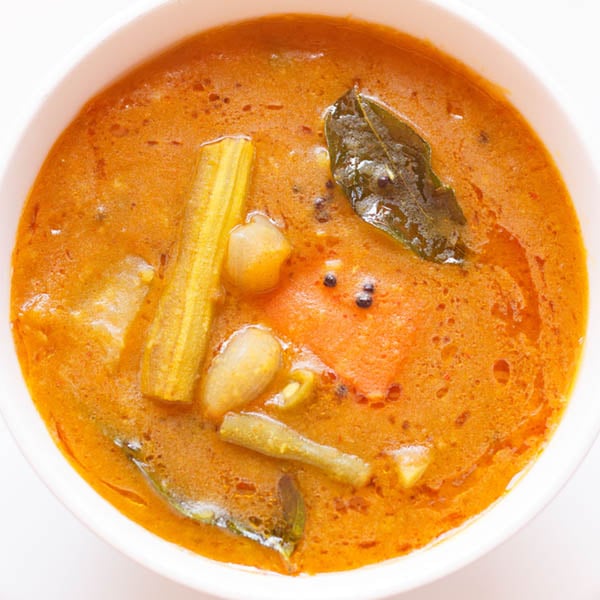
Sambar is a traditional South Indian lentil and vegetable stew made with toor dal, tamarind, mixed vegetables and sambar powder, finished with a tempering of mustard seeds, curry leaves, asafoetida and dried red chilies. Serve it with steamed rice, idli, dosa or medu vada.
Ingredients
Instructions
Making Tamarind Pulp
Soak the tamarind in hot water for 20 to 30 minutes.
Once the tamarind gets soft, then squeeze the tamarind in the water itself. Discard the strained tamarind and keep the tamarind pulp aside.
Cooking Lentils
Rinse tuvar dal a couple of times in water.
Drain all the water and add the dal in a 2 litre stovetop pressure cooker. Also add ¼ teaspoon turmeric powder.
Add 1½ to 1¾ cups water and mix. Cover and pressure cook dal for 7 to 8 whistles or 9 to 10 minutes on medium heat.
When the pressure settles down on its own, open the lid and check the dal. The dal should be completely cooked and mushy.
Mash the dal with a spoon or wired whisk. Cover and keep aside. You can see the consistency of dal in the pic below.
Cooking Vegetables
When the dal is pressure cooking – rinse, peel and chop the vegetables.
Take the chopped vegetables in a pan or pot. Also add 6 to 7 pearl onions or 1 small to medium onion (thickly sliced) and 1 small to medium tomato (quartered).
Sprinkle turmeric powder, kashmiri red chilli powder and salt as per taste. Adding kashmiri red chili powder is optional and can be skipped.
Add 1½ to 2 cups water and stir.
Keep the pan on a stove top and begin to cook vegetables on a medium-low to medium flame. In between do check when the vegetables are cooking.
Cook till the vegetables are almost done. Ensure that you don’t over cook the vegetables.
Making Sambar
Once the vegetables are almost cooked, then add the tamarind pulp and 1 to 1½ tablespoons sambar powder. Mix well.
Add the mashed dal. Mix again very well.
Simmer on a medium-low heat till the sambar comes to a boil.
You will see a frothy layer on top when the sambar begins boiling. At this step switch off the heat. Cover and set aside.
Tempering
In a small pan or tadka pan, heat 2 tablespoons gingelly oil. Add ½ tsp mustard seeds.
Let the mustard seeds crackle.
Then add 1 to 2 dry red chillies (halved and seeds removed).
Immediately add 10 to 12 curry leaves, 5 to 6 fenugreek seeds (methi seeds) and 2 pinches of asafoetida (hing). Be careful as the oil splutters while adding curry leaves.
Fry them till the red chilies change color and curry leaves become crisp.
Immediately add this tempering mixture in the hot sambar.
Cover the pan with its lid for 4 to 5 minutes, so that the aroma and flavors from the tempering mixture gets infused with the sambar.
Serve sambar hot. You can garnish it with a few coriander leaves if you prefer. It can also be served with steamed rice, idli, dosa, medu vada or uttapam.
Serving Suggestions
Serve sambar with steamed rice, idli, dosa or medu vadai or uttapam.
Vary the consistency of sambar keeping in mind the dish you want to serve it with. Example - a medium to slightly thin sambar is served with idli, dosa and medu vada. Sambar with a medium to thick consistency is served with steamed rice.
Storage & Leftovers
Store any leftovers in the refrigerator for a day only. Note that the consistency will thicken after refrigeration. Add some water and mix to get your desired consistency while reheating in a pan.
Nutrition
- Calories
- 265 kcal
- Carbohydrate Content
- 38 g
- Protein Content
- 11 g
- Fat Content
- 8 g
- Saturated Fat Content
- 1 g
- Sodium Content
- 60 mg
- Fiber Content
- 13 g
- Sugar Content
- 8 g
- Serving Size
- 1 serving