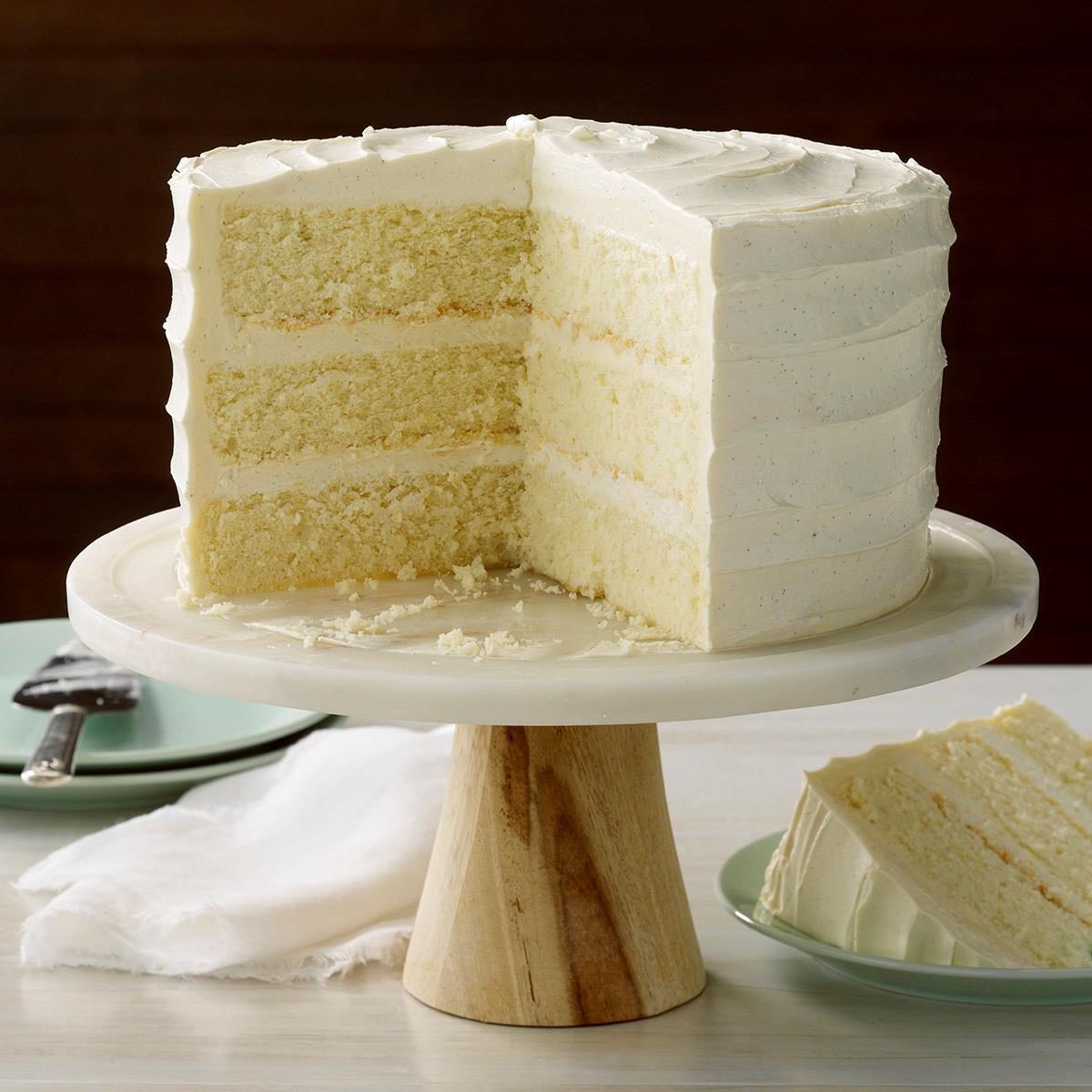
Our Test Kitchen created our best vanilla cake recipe yet. It's tender, moist and packed with rich vanilla flavor—a must for any special occasion.
Ingredients
Instructions
Start this cake by combining both the vanilla extract and paste together in a bowl with sour cream. Let this sit for 10 minutes. This recipe uses two kinds of vanilla—extract and paste. Trust us, you want to use both here to get all the flavor. Many white cakes tend to be a bit mild, but this one brings depth of flavor thanks to this double dose. And make sure to use the best vanilla here—you'll notice it. As for the sour cream, it helps make this cake extra moist and tender.
While the vanillas and sour cream are sitting, sift together cake flour, sugar, baking powder and salt together twice. You'll want to sift twice just to make sure there are absolutely no lumps here and to ensure the cake is as fluffy and soft as possible (the cake flour also helps make the cake soft). Then add canola oil and softened butter and beat until the mixture is crumbly. Next, add the egg whites one at a time to create the batter. Be sure to beat well after each addition. Then add the whole eggs—again, one at a time—and beat well. Be sure to scrape down the sides of your bowl occasionally. Finally, add in the sour cream and vanilla mixture and beat in a mixer until just combined. Editor's Tip: If you forgot to take the butter out of the fridge, here are some tips on how to soften butter fast.
Grease and line three nine-inch pans with parchment paper. If you don't have three pans—don't sweat it, you can make the cake layers in shifts. Divide the batter equally between the three pans and bake in a 350ºF oven for 30 to 35 minutes or until a toothpick inserted into the center of each layer comes out clean. When the cakes are done, move them to a wire rack to cool in the pans for 10 minutes. Then turn them out of the pan, peel away the paper and let them cool all the way before frosting. Editor's Tip:If you're new to baking cakes, here are step-by-step instructions on how to grease a cake pan.
This modified Swiss meringue buttercream frosting is definitely a level up from basic American buttercream (that's butter, confectioners' sugar and milk), but it's worth the extra effort. If you're going to make a special occasion vanilla cake, you may as well finish it off with decadent frosting. Start making the frosting by melting the baking chips with cream until smooth. You can do this in the microwave in 30 second bursts. Once this mixture is smooth and melted, stir in the vanilla paste and extract. Set this aside to cool slightly. While that rests, whisk the egg whites, sugar, cream of tartar and salt in a heatproof bowl until well blended. Then place the bowl over a saucepan of simmering water on medium heat. Whisk the mixture constantly until a thermometer reads 160ºF. This should take about six to eight minutes. Editor's Tip: An instant-read thermometer, like our Test Kitchen's favorite Thermapen, comes in really handy here. It's a worthwhile investment for baking, cooking and grilling. When the mixture reaches that temperature, remove the bowl from the heat and beat on high speed until the frosting cools down to 90ºF. This will take around seven minutes, so be patient! Gradually beat in the butter a few tablespoons at a time on medium speed until the butter is well incorporated. Finally, beat in the cooled vanilla and white chocolate mixture until well blended.
With the vanilla cake made and the Swiss meringue buttercream frosting ready, it's time to put them together. If you find that your cakes are a bit mounded on top and not quite ready for stacking, carefully even them out with a serrated knife. Here's how to level cakes. Once the layers are flat, place the first layer of cake on a cake stand or plate. To help it stay in place as you frost, put a small dab of frosting on the plate and then place the layer on top. This keeps it from scooting around. Using an offset spatula, frost between the layers. Once the layers are stacked, give the outside a quick crumb coat. A crumb coat is just a very thin layer of frosting that you spread over the whole cake. This thin coating helps contains any crumbs (hence the name) and serves as a good base for further decorating. With the crumb coat finished, frost the outside however you like. You can opt for fancy piping or just simple swirls using that offset spatula. This cake will be gorgeous however you finish it.
Nutrition
- Calories
- 399 calories
- Fat Content
- 16g fat (8g saturated fat)
- Cholesterol Content
- 54mg cholesterol
- Sodium Content
- 462mg sodium
- Carbohydrate Content
- 59g carbohydrate (32g sugars
- Fiber Content
- 1g fiber)
- Protein Content
- 5g protein.