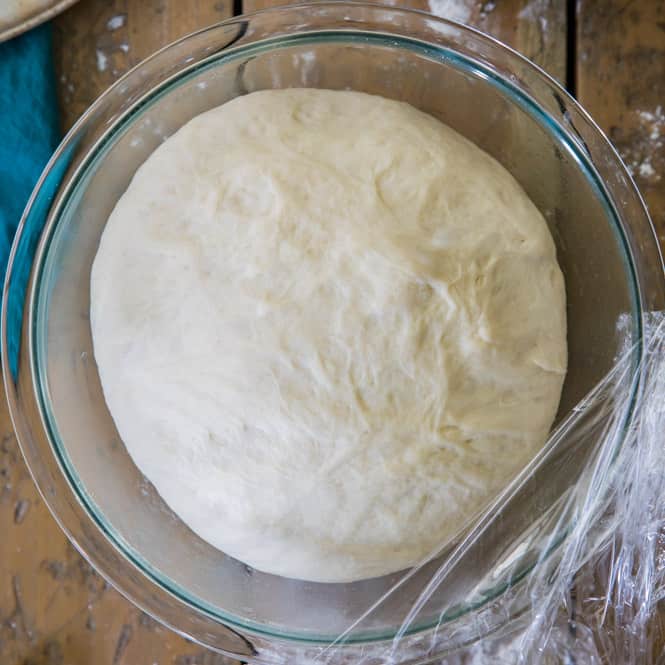
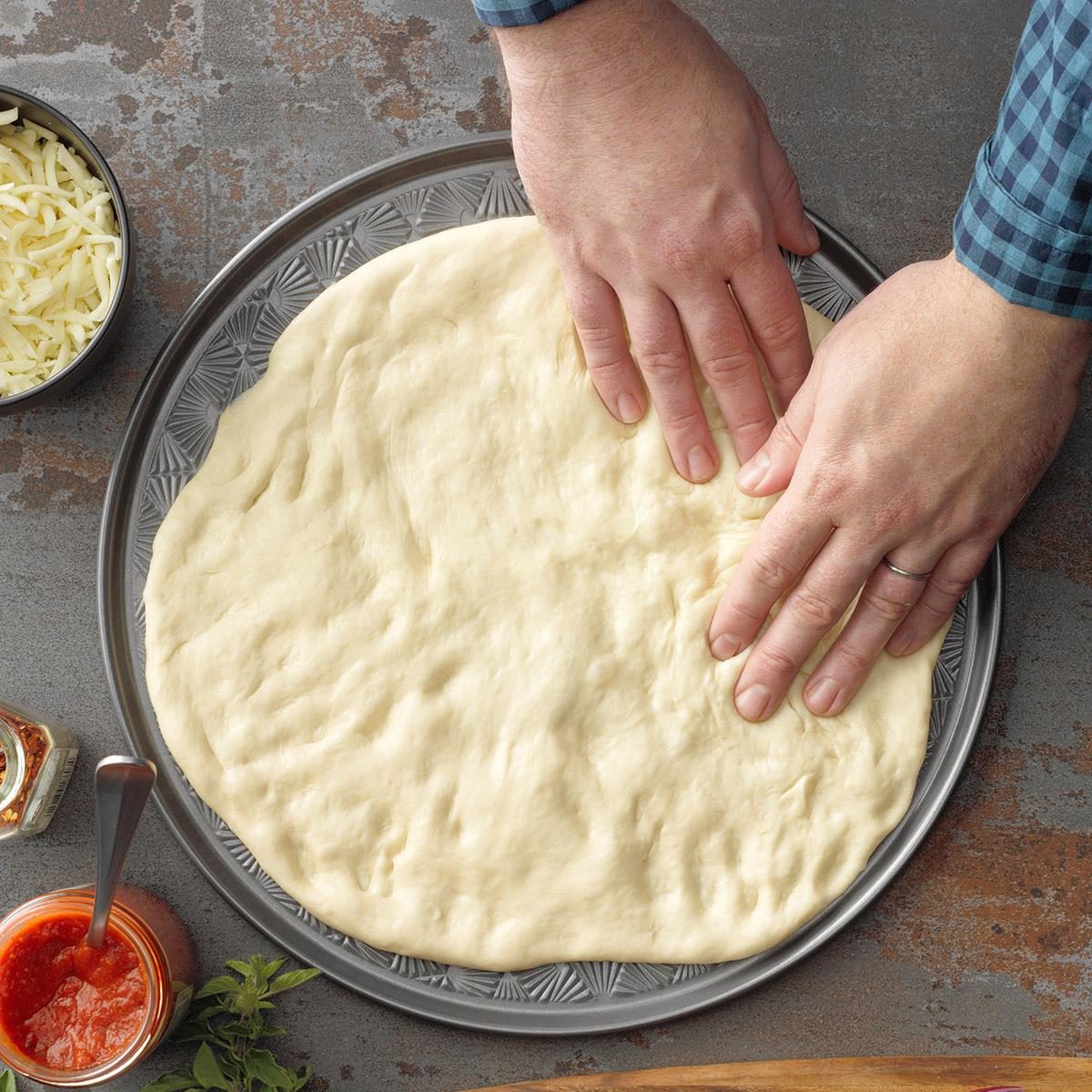
Empanada dough
fromsbs.com.auwww.sbs.com.au/food/recipe/empanada-dough/aclvq6l7u
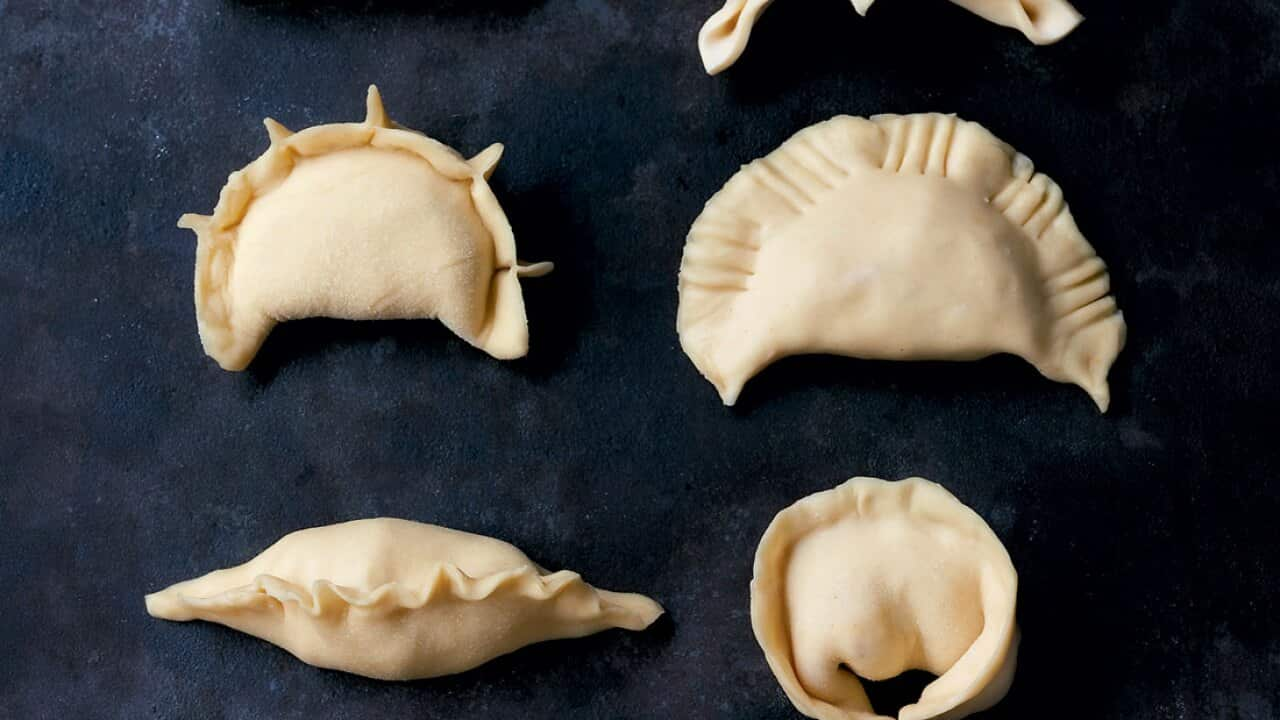
There are two types of dough, depending on whether the empanada is baked or fried. While making the empanada dough is very easy, you still need a bit of practice to acquire the technique of folding them. After sealing the empanada, you can give it whatever look you like, based on the traditional decorations or not. Here are some repulgue used by clasico argentino.
Ingredients
Instructions
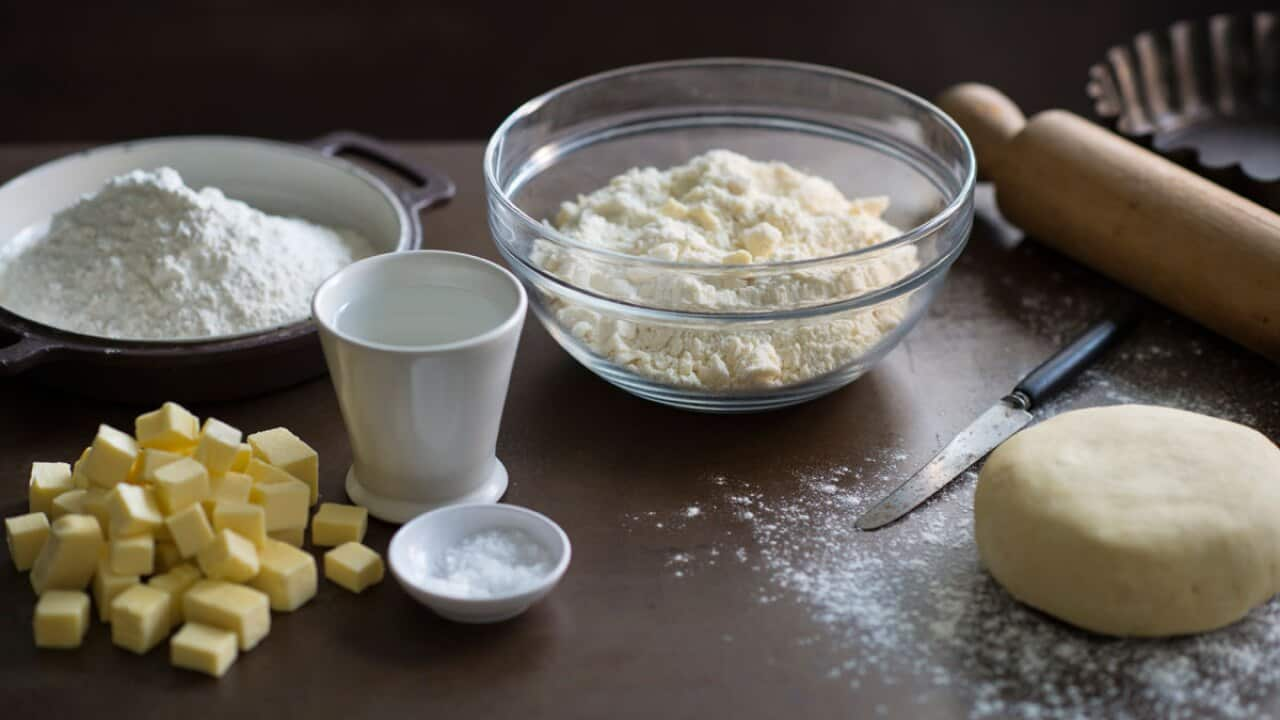
Classic dough (for baking)Cut 325 g (11½ oz) of unsalted butter into small cubes. Sift 1 kg (2 lb 4 oz/6⅔ cups) of plain (all-purpose) flour into a large bowl. Add 25 g (1 oz) of salt and the cubes of butter.Rub the butter into the flour and salt with your hands until you have a sandy texture with no lumps.Add 350 ml (12 fl oz) of water and combine with the flour mixture using your hands. Add a little more water if necessary. Knead the dough on a lightly floured work surface for 10–15 minutes.Form into a ball. Wrap in plastic wrap and refrigerate for 2 hours.Puffed dough (for frying)Combine 1 kg (2 lb 4 oz/6⅔ cups) of plain (all-purpose) flour with 25 g (1 oz) of salt in a bowl.Add 160 ml (5¼ fl oz) of sunflower oil and 350 ml (12 fl oz) of water, then mix with a wooden spoon.Turn out onto a lightly floured work surface and knead for 10–15 minutes until smooth. Wrap in plastic wrap and refrigerate for 2 hours.How to fold the empanadaPlace the dough on a lightly floured work surface and roll it out to a thickness of 3 mm (⅛ inch). You may find it easier to roll half the dough at a time.By hand, or with a cutter, cut out rounds 14 cm (5½ inches) across for the traditional version.Using a 60 ml (2 fl oz/¼ cup) ice-cream scoop or measuring cup, form small balls of cooled filling and place one on each round of dough. Place the filling in the middle of each round, leaving about 1 cm (½ inch) between the filling and the edge of the dough.Using your fingers, moisten the edge of the dough with a little water. Fold the round over onto itself into a half-moon shape. Pinch the edges with your fingers to seal the two edges of dough together.To make the empanada edging, each pattern has its own technique.How to edge the empanadaChoriempa Place a sausage on the round of dough and fold the edges inward. Carefully wrap the sausage in the dough.Pastelito Place a square of dough on the work surface. Place a portion of filling in the middle. Place a second square of dough on top, offsetting the corners relative to the first square, so you make an 8-pointed star. Pinch together the corners of the bottom square.Humita (top left) Once the empanada has been shaped into a half-moon, pinch the edge in five places to make a decoration with five points.Pollo (top right) Once the empanada has been shaped into a half-moon, seal the edges using a fork: mark the dough in five places to make a striped decoration.Cordero (bottom left) Once the empanada has been shaped into a half-moon, make waves in the edge with your fingers.Jamon y queso (bottom right) Once the empanada has been shaped into a half-moon and the edges are well sealed, bring the two points towards each other and join them together.Puerro Once the empanada has been shaped into a half-moon and the edges are well sealed, gather the two points together and join them while keeping the edging quite flat, so your empanada is almost circular.Carne Once the empanada has been shaped into a half-moon and the edges are well sealed, fold the edges over themselves 13 consecutive times, from one end to the other.The "carne" decoration is the most classic edging, the "pollo" one is the easiest to do. You will encounter still more decorations at Clasico Argentino. These are the most common ones.Get the recipe for a . Recipe and image from Argentinian Street Food, Enrique Zanoni & Gaston Stivelmaher (Murdoch Books, $29.99, hbk)