How to Make Japanese Strawberry Daifuku (Ichigo)
fromfood.onehowto.comfood.onehowto.com/recipe/how-to-make-japanese-strawberry-daifuku-ichigo-11953.html
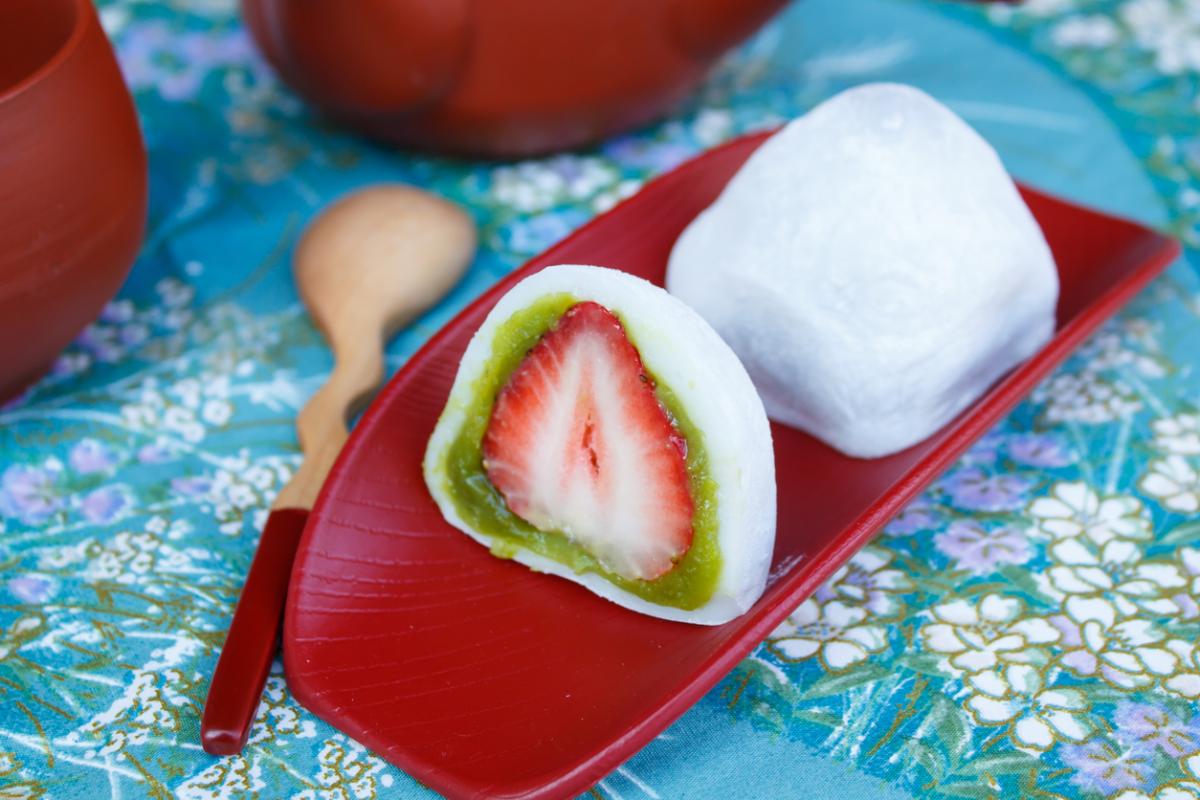
If you have never seen daifuku before, then you might be forgiven for thinking they are some sort of food from the future. This is partly because its texture resembles something like an alien pod, with its smooth outer layer like a weathered stone giving way to an often gooey inside which can be made from a range of fillings. However, it is actually centuries old and has been used in everything from grand ceremonies such as coronations to smaller everyday rituals like afternoon tea. This oneHOWTO article shows you how to make Japanese strawberry daifuku (ichigo) a modern version created sometime in the 1980's and incredibly popular in Japan ever since.
Ingredients
Instructions
We will need to start with the mochi, which is the term for the rice flour dough that wraps the filling, similar to a sweet empanada. However, this method is quite different, and rice flour dough requires a unique technique. Begin by sifting in the rice flour, adding the sugar, and mixing them together thoroughly.
Using a whisk, beat the dough mixture while slowly pouring in the water. Continue to combine until you achieve an even consistency that will appear quite watery, unlike dough made with wheat flour and eggs. This texture is essential for creating the perfect mochi.
There are two ways to cook the mochi. The first is to steam it. If you don't have a steamer, you can improvise one by placing a metal colander over a saucepan of water. Take a glass or metal bowl with the liquid mochi dough and place it into the center of the colander. Boil the water and cover with a lid to keep in the steam and cook the dough. You will need to steam it for about 15 minutes and stir halfway through. When you do this, you'll see that it starts to come together, almost like a jello. Stir again at the end so that you have a smooth dough.
You can do the same thing much easier and quicker in the microwave. Place the liquid dough in a microwaveable bowl, loosely cover the top with some plastic wrap, and place it in the microwave. Heat on high for about 1 minute. Remove, stir, and then reheat for another 1 minute or so. Remove again and heat for about 30 seconds or until it looks formed. Stir again so that you have an even consistency. The microwave method is quite efficient and can save a lot of time.
Cover and let the mochi cool. You should end up with a substance that is almost like play-doh. Spread out some of the cornflour onto a clean surface and roll out the mochi with a rolling pin. You will need a lot of it, so keep flouring the dough and the surface almost every time you roll. This step is crucial to prevent sticking and ensure a smooth finish.
When you have a thin flat dough about 1/8 thick, put it in the fridge for about 15 minutes to cool further. This cooling step helps the dough set and makes it easier to handle when forming the daifuku.
Cut out 4 circles with a pastry cutter or an upturned tumbler. Dust off the excess starch with a dry pastry brush. This ensures that the dough is not overly sticky and is ready to be filled with delicious ingredients.
Anko is a sweet bean paste that is used in a lot of Japanese cuisine and can easily be found in any good Asian supermarket. Put about a large teaspoon onto the center of each mochi and then place a washed strawberry onto the anko. You can mix in matcha green tea powder with the anko for extra flavor and coloring. This addition of matcha not only enhances the taste but also adds a vibrant green hue.
Wrap the daifuku by folding up the edges of the mochi and then gently, but firmly, pressing the edges together to seal them. You can roll them in your hands to make them smooth all over, but this is a tricky technique and not necessary for the outcome. Dust with cornstarch. This step is key to ensuring that the daifuku holds its shape and maintains its delightful appearance.
Enjoy with one of your favorite teas. If you want to know a little more about Japanese cuisine, why not look at this article on how to make buckwheat noodles. Pairing daifuku with a traditional Japanese tea can elevate the entire experience, making it a perfect treat for any occasion.