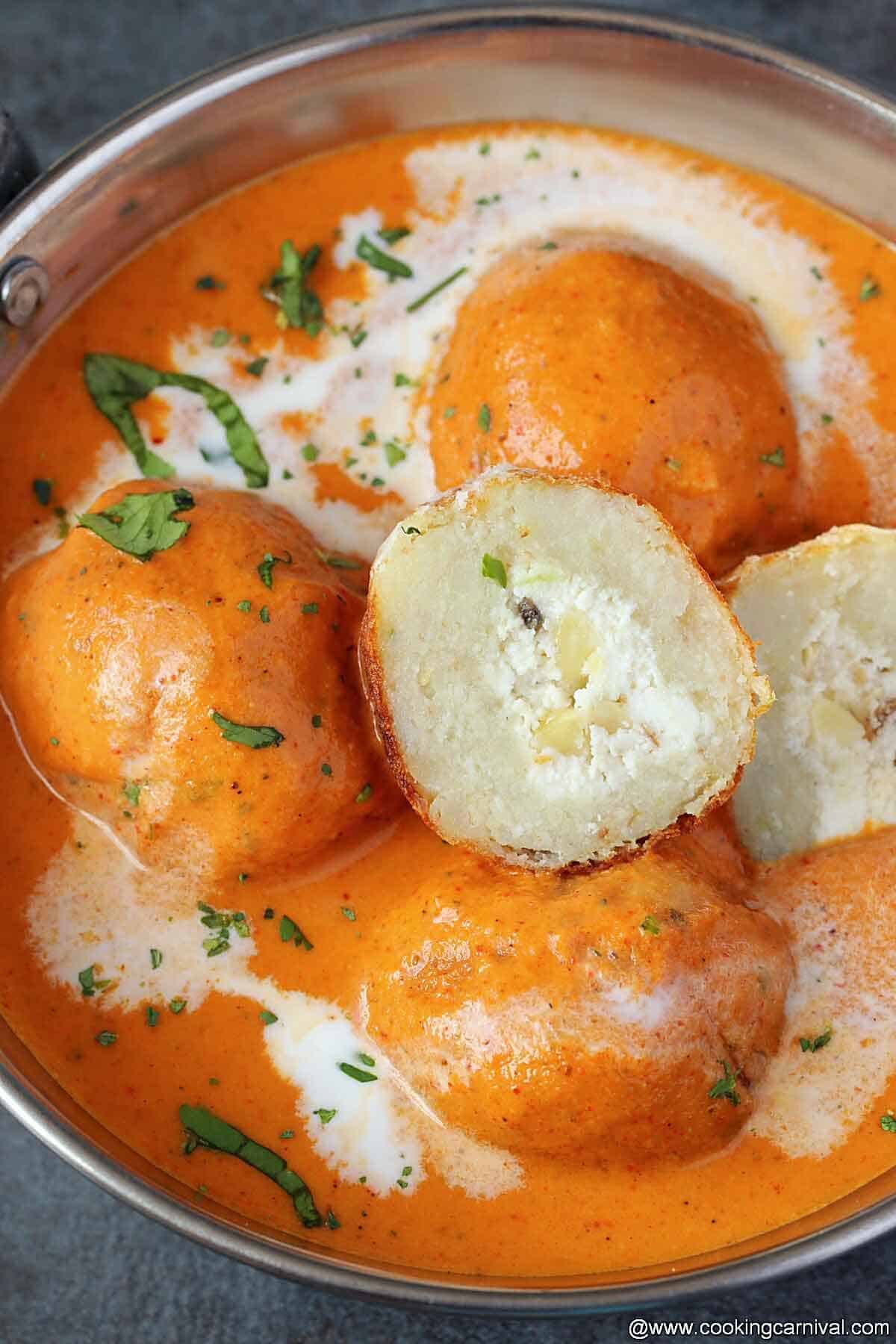
Malai Kofta - deep-fried paneer and potato balls, dunked in a creamy, smooth, scrumptious, lightly sweet onion tomato based gravy! It pairs very well with Tandoori roti and Naan! Once you taste this Punjabi recipe you will make it again and again. I guarantee!
Ingredients
For kofta (Potato mixture)
For stuffing
For gravy -
Other ingredients
Instructions
For kofta (Potato mixture)
Take all the ingredients (Potato, paneer, salt, bread crumbs, ginger-chili paste) except corn starch in a bowl. Mix them very well. Divide it into 12 equal parts.
Stuffing
Take all the stuffing ingredients (paneer, cream, raisin, cashew, cardamom powder, and sugar) in a bowl and mix them well. Make 12 equal size small round balls. Keep it aside.
Take one portion of potato mixture and flatten it. Place one portion of the prepared stuffing mixture in the center.
Bring the edges toward the center and seal the paneer and dry fruit mixture completely with the outer covering. (Photo 10)
Make all the koftas the same way. You can shape them in any way you like.
Coat the koftas with little bit corn flour.
Heat the oil well.
Add 3 to 4 koftas and deep fry them until golden brown from all over. Keep the flame on medium heat.
Take them out on an absorbent paper.
For gravy
Heat butter and oil in a pan. Add cumin seeds, let it crackle. Add ginger-chili-garlic and onions. Saute for 2 minutes.
Now add tomatoes. Saute for about 10 to 12 minutes or tomatoes are fully cooked on medium heat. Stir occasionally. Add 1 to 2 tablespoon water if the tomato is sticking to the bottom.
Now add cashews into it. Mix them very well. Cook it for 1 more minute.
Let the mixture cool down.
Take the mixture into a blender jar and grind it very well using 1 cup of water.
Next, Strain the gravy using a strainer.
In another pan, take this gravy. Add chili powder, garam masala, kitchen king masala, and turmeric powder. Mix them very well and let it cook for 5 minutes. (Photo 24)
Add Kasuri methi and sugar, let it cook for a couple of more minutes.
Now add heavy cream and let it the gravy simmer on a medium flame for 2 minutes.
Your gravy is ready. Taste it once and adjust the spices according to your taste.
Assemble
For crispy texture, make gravy in a serving bowl. Place the koftas into the gravy. Garnish it with Heavy cream and cilantro.
For melt in the mouth texture, add kofta in gravy and then cook it for 2 minutes and garnish it with cream and cilantro.
Your Yummy Malai Kofta is ready. Serve them with Naan, Papad and Sirke wala pyaaz. Enjoy!!!!
Notes
- Can we make this in instant pot/pressure cooker? For hands off cooking, I love to make this in my instant pot as well. I do pot in pot method and cook the potatoes and gravy together. For potatoes - Cut 300 grams of potatoes into half. Take them in stainless steel or other small pot in a pot container for the Instant Pot. Add half cup water. For gravy - Heat butter and oil. Add cumin seeds and let it splutter. Now add ginger, garlic, green chilies, onion and tomatos. Saute for a minutes. Now add cashew and ½ cup water. Mix well. Now place tall trivet. Place the potato pot on top of it. Cover the instant pot, set the vent valve on sealing positions, press the manual/pressure button and set the timer for 12 minutes. Once cooking time is done, let the pressure release naturally. Open the lid, take out the potato pot. Mash the potato and follow the above process to make kofta. For gravy follow the same remaining process. Making malai kofta gravy in instant pot makes life easy! :) Pro-tips and quick FAQS I have tried a nonfried version as well using APPE PAN. It tastes as good as fried ones. To get restaurant-style silky gravy, strain the puree using a strainer. Kashmiri red chilies and red tomatoes are the keys to get the restaurant like the beautiful orange color of the gravy. You can use Almonds in this gravy instead of cashew. Use homemade paneer in the kofta if possible to get a better taste. Don't add too much bread crumbs. Or else it will affect the taste and texture. Seal kofta properly. Don't forget to coat koftas in LITTLE BIT cornstarch or arrowroot before frying. this step prevents kofta from separating in the oil. Make sure the oil is hot enough. Or else the koftas can break when dropped into the oil. Fry koftas on medium-high heat. If you want to make restaurant-style malai kofta, don't skip heavy whipping cream or butter. They add flavor and richness to the dish. Don’t forget to add Kasuri Methi in the end, it adds a fantastic aroma and flavor to it. Add more sugar if your tomatoes are sour. Drizzle some cream before serving the dish for that ohhh yummy taste. ;) I would recommend following the recipe as is and don’t compromise on spices and any other ingredients, because this recipe has its charm and we are sure once you try it, you will make it again and again. Can you make this recipe vegan? Yes, you can! Instead of paneer use tofu. - I strongly recommend you use extra firm tofu. When you use the tofu, dry it before with a paper towel and get rid of any excess liquid. Then grate and use. Soft tofu will be impossible to grate. Use Coconut cream instead of heavy cream. Instead of butter use only oil. What to serve with this curry? This curry can be served with Garlic Naan, kulcha, butter naan, Tandoori roti, jeera rice or plain rice. Can you freeze this curry? You can. If you are making Malai Kofta for a big occasion such as Diwali Party and have less time on your hand because of the festival, you can make this ahead of time and store it in the fridge or freezer. Here are some suggestions, Don't fry potato balls (Kofta) and freeze them. Store gravy and potato balls separately. Do not add cream in the gravy if you are planning to freeze this. Whenever you are ready to eat, add at that time. Store it in an airtight container in the freezer for up to 2 to 3 months. The day you want to eat, take them out of the freezer, bring them to room temperature and deep fry the potato balls in oil, add heavy cream in the gravy, add kofta in the gravy and heat them together. The post is updated with better content, photos and video, originally published in March 2015.